Start with the policy for the exact mattress you are buying
A sleep trial gives you time to decide whether a mattress suits your preferences at home. It is not necessarily the same as a store’s ordinary return window, and a prominently advertised trial length does not tell you everything about your options. Before ordering, find the written policy that applies to your mattress, seller and purchase channel. A brand’s website, a physical store and a third-party marketplace may have different rules for the same model.
Check whether the trial applies to your mattress size and configuration, as well as to clearance items, floor models or open-box purchases. If you are buying a mattress with a base, protector or pillows, look for separate return terms for each item. Keep a copy of the policy and your order confirmation so you can refer to the terms that were presented when you bought it.
Work out the real trial window
Look for the event that starts the clock: it might be the order date, shipment date or delivery date. Then check whether the policy measures the period in calendar days and whether you must request a return before the final day or complete pickup by then. Delivery delays can matter if the trial begins before the mattress arrives. If the wording is unclear, ask the seller to explain it in writing before you order.
Some policies require you to keep the mattress for a minimum period before requesting a return. That waiting period may leave less time to act than the headline trial length suggests. Mark the earliest date you can request a return and the last date you can contact the seller. Trying a mattress for a while can help you judge its feel, but a required waiting period is still a condition of the policy, not a promise that the mattress will become comfortable.
Read the return steps and condition requirements
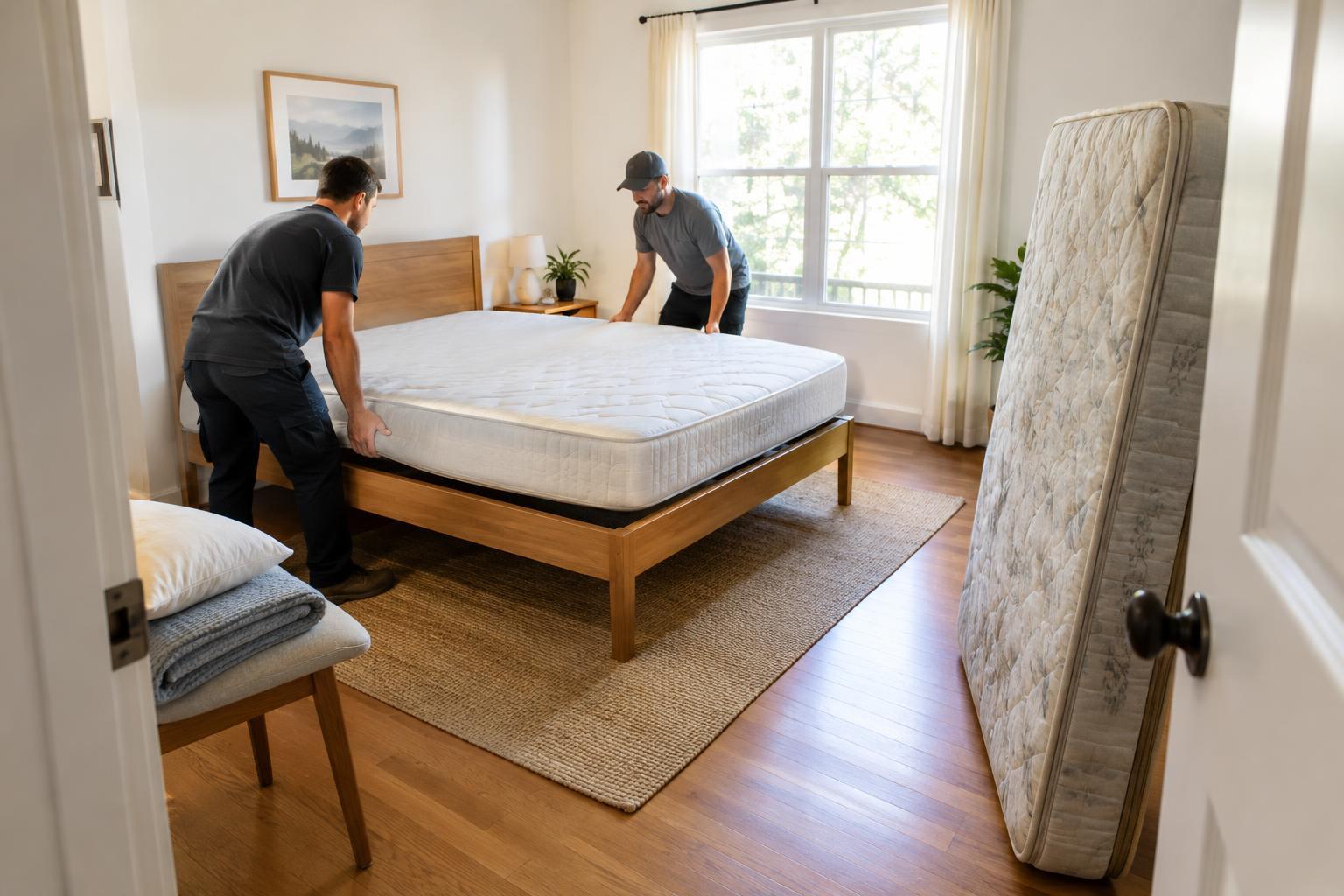
Find out exactly how to initiate a return. The seller may require an online form, an email or contact with a particular support team. Ask what happens after your request: will the seller arrange a pickup, direct you to a local donation option or give you other instructions? Do not dispose of the mattress or arrange your own return unless the policy allows it. Save correspondence and any receipt or confirmation the seller asks you to provide.
Condition rules deserve close attention. A seller may refuse a mattress with stains, damage or signs of improper use, even during a trial. Read any requirements concerning a mattress protector, original labels or documentation. If the mattress arrived damaged, photograph the packaging and mattress promptly and report the issue through the seller’s stated process. Delivery damage may be handled differently from a change-of-mind return.
Calculate the cost and form of your refund
A return described as “free” may still leave you responsible for an original delivery charge, an upgraded service, a pickup fee or the cost of nonreturnable accessories. Look for deductions described as restocking, processing or transportation fees. Compare the amount you would actually receive with the total you expect to pay, including taxes and any bundled products. If the answer is hard to find, ask for a written breakdown.
Check whether an approved return goes back to your original payment method or becomes store credit. An exchange can have different terms from a refund: the replacement mattress may receive a new trial, the remainder of the original trial or no additional trial. Promotions and discounts may also be recalculated if you return only part of a bundle. These details matter if you are choosing between two models and hope to switch later.
Keep the trial, warranty and shopping decision separate
A sleep trial addresses whether you want to keep the mattress under the seller’s stated return rules. A warranty addresses specified defects under its own conditions; it generally is not a substitute for a comfort return. Read both documents, but do not assume that a long warranty extends your trial or that a trial covers wear, spills or changes in preference after it ends.
Finally, treat the trial as one part of the buying decision rather than the main reason to choose a mattress. Compare construction, firmness descriptions, dimensions, delivery requirements and total price alongside the return terms. A useful policy is one you can understand and follow: you know when to decide, whom to contact, what condition the mattress must be in and how much money you would get back.