Start with the item and its components
Before comparing materials, identify what the label describes. A sheet is usually one layer of fabric, while a pillow, duvet or comforter may have a separate outer shell and filling. A label that says “100% cotton shell” does not tell you what is inside. Look for separate listings for the cover, fill and any lining, and check whether a description refers to the whole item or just one component.
For a fiber blend, read the listed percentages rather than relying on a prominent phrase on the package. A sheet advertised as “linen blend,” for example, may combine linen with cotton or another fiber; the percentages tell you how much of each is listed. If you are shopping for a matching set, check individual pieces when possible. A decorative trim, pillow insert or fitted sheet may not have the same construction as the item pictured most prominently.
Separate fiber content from fabric construction
Fiber content tells you what the threads are made from. Common bedding fibers include cotton, linen, silk, wool and manufactured fibers such as polyester and viscose. Construction tells you how those threads become fabric. Two sheets with the same fiber content can feel different because one is woven differently, uses different yarns or has a different finish.
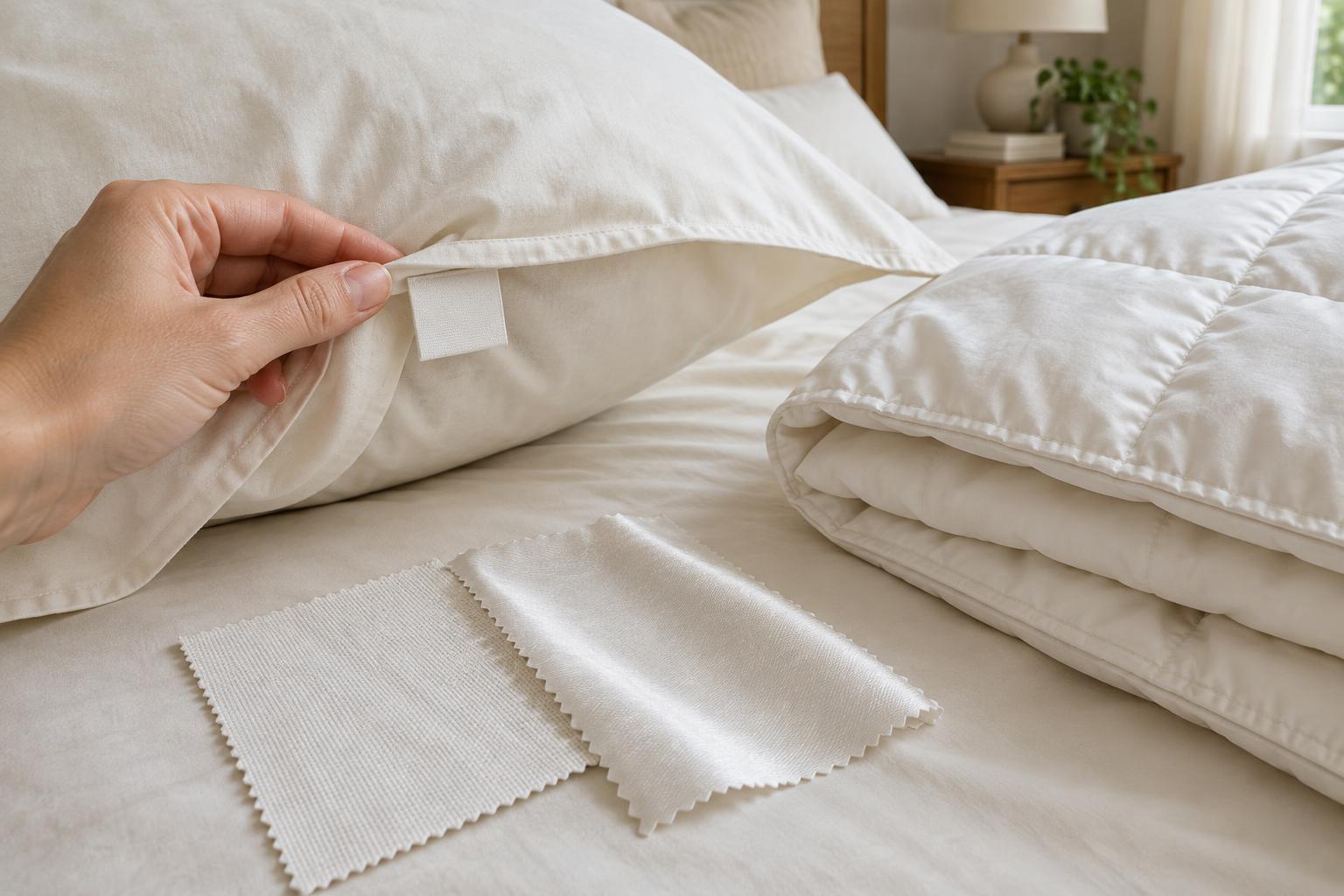
Percale and sateen, for instance, describe weave types, not kinds of cotton. Percale commonly has a crisp feel, while sateen often feels smoother and drapes more readily. Neither term guarantees quality or a particular sleeping temperature. Jersey is a knit rather than a weave; its stretch and T-shirt-like feel come partly from that construction. Flannel refers to a fabric that has typically been brushed for a soft, fuzzy surface. These terms help narrow your preferences, but they cannot replace the feel of the finished product.
Be careful with familiar-sounding fiber names. “Bamboo” on bedding packaging may refer to viscose made from bamboo rather than fabric woven directly from bamboo fibers. “Microfiber” generally describes very fine synthetic fibers, often polyester, but it says little by itself about the fabric’s weight or finish. Read the full content line to learn what the material is, then use construction terms to picture how it may feel.
Put thread count and fabric weight in context
Thread count usually refers to the number of threads in a measured area of woven fabric. It is most useful when comparing otherwise similar sheets, not as a universal quality score. Yarn thickness, weave, fiber, finishing and how a count is calculated can all affect the result. A higher number does not automatically mean a softer, stronger or more breathable sheet.
Some bedding labels use fabric weight instead, often expressed as grams per square meter, or GSM. Weight can help you distinguish a lighter fabric from a more substantial one, but heavier is not always better. A plush winter blanket and a light summer cover serve different purposes. Compare weight alongside material and construction, and remember that a garment-like knit, a woven sheet and a filled comforter are not directly comparable by one number.
Check finishes, fill descriptions and care requirements
Labels and packaging may mention treatments such as wrinkle resistance, softness finishes or prewashing. These details can matter if you prefer a particular feel or want to avoid certain finishes, but a brief claim may not explain the process. Likewise, terms such as “down alternative” describe a type of substitute rather than a single fiber; check the fill content for specifics. For down-filled items, read both the shell and fill information instead of assuming the cover is made from the same material as the filling.
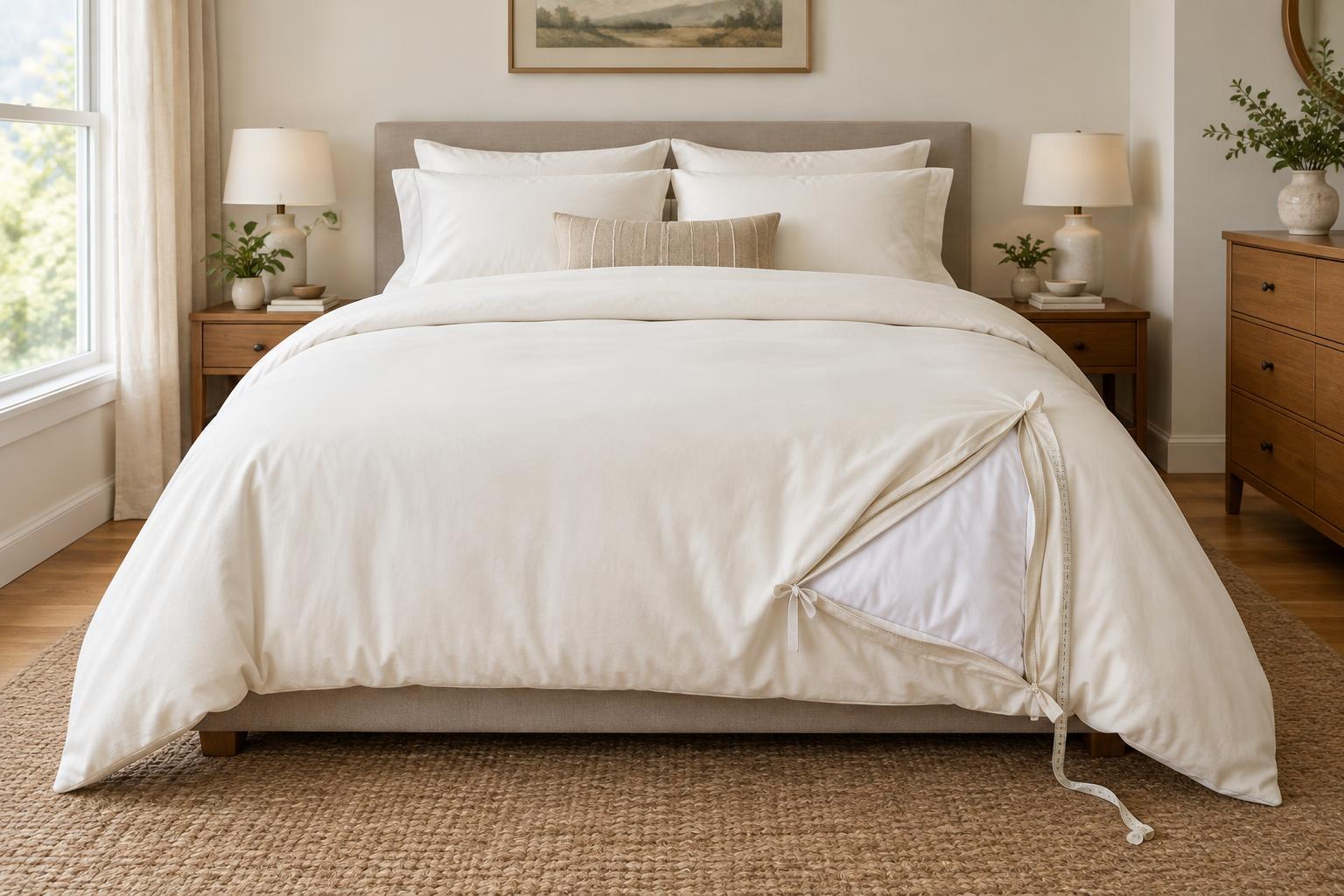
The care label is part of the buying decision. Check washing temperature, drying instructions and any restrictions before choosing an item for everyday use. A bedding piece that requires special handling may be less convenient than one you can launder in your usual routine. Consider the item’s size and bulk, too: even when a comforter is machine washable, it must fit with enough room to move in the washer and dryer. Follow the item’s instructions rather than assuming all products made from the same fiber need identical care.
Compare labels against what you actually want
A useful comparison starts with a short list: desired feel, preferred weight, ease of care and the components you want to avoid or seek out. Then read each label in the same order: item and components, fiber percentages, weave or knit, relevant weight or thread-count information, and care instructions. This approach makes it easier to spot meaningful differences without treating a single package claim as the whole story.
Labels describe materials and construction, but they cannot fully predict how bedding will feel on your bed. If you can, handle a sample, check the product’s dimensions and read the seller’s return terms before buying. For online shopping, favor clear specifications that identify the shell and fill separately and explain any prominent material terms. The best label is not necessarily the one with the most impressive number; it is the one that gives you enough detail to choose bedding that suits your preferences and routine.