What rotating a mattress does
Rotating a mattress means turning it 180 degrees so the end that was at the head of the bed moves to the foot. It does not mean turning the mattress upside down. Rotation changes which areas bear the most weight over time and may help wear develop more evenly, particularly if you tend to sleep in the same position each night.
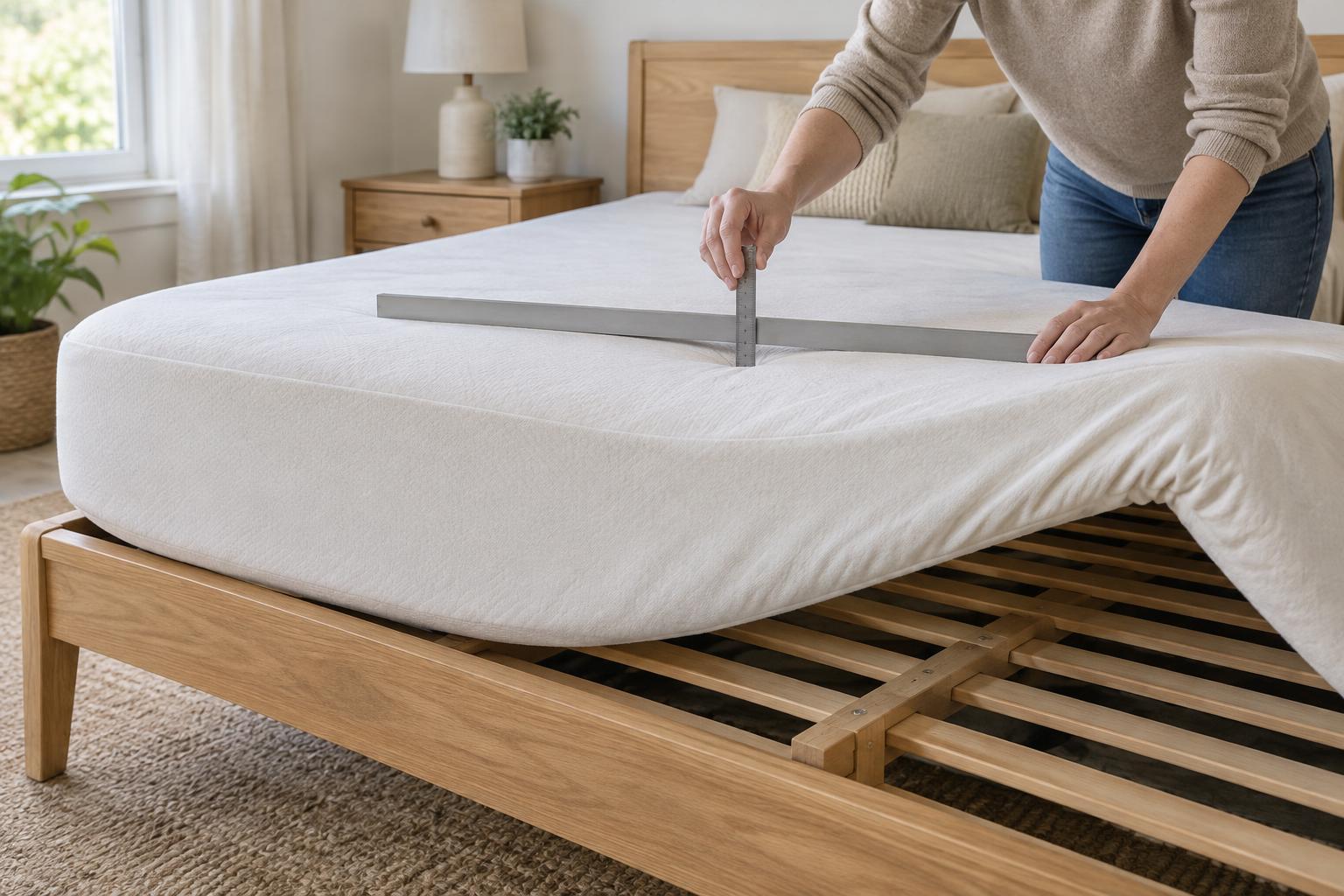
Rotation cannot restore worn-out materials or remove a lasting body impression. It is one part of routine care, alongside using a suitable foundation, keeping the mattress clean, and following its care instructions. If one area feels noticeably different from the rest, check whether the mattress is fully supported before assuming rotation will solve the problem.
Choose a schedule that fits your mattress
Start with the manufacturer’s care guide or label. Its instructions should take priority over a general schedule, especially if the warranty specifies how the mattress must be used and maintained. If the maker recommends rotation, note the interval in a calendar rather than waiting until the bed feels uneven.
If you cannot find model-specific instructions, rotating about every three to six months is a practical starting point for many conventional mattresses that are symmetrical from head to foot. It is a guideline, not a rule for every bed. A mattress that is difficult to move does not need to be handled casually or more often than its instructions require. For a new mattress, check the supplied guidance before setting a routine; some makers suggest a different schedule early in its use.
Know when not to rotate or flip
Some mattresses have a designated head and foot. Models with targeted support zones, an unusual shape, or features positioned for a particular end of the bed may not work as intended after a 180-degree turn. If the label or care guide says not to rotate, leave the orientation as directed. If the instructions are missing and the construction is unclear, ask the manufacturer or retailer before moving it.
Flipping is a separate question. Many mattresses have a finished sleep surface on one side and a support structure or non-sleep surface on the other; these should not be flipped. A pillow top is often a visible clue, but the product instructions are the better authority. Only flip a mattress if it is explicitly designed for sleeping on both sides, and follow any recommended sequence for flipping and rotating.
The broad material category alone does not settle the issue. Foam, latex, innerspring, and hybrid mattresses can differ in how their layers and comfort zones are arranged. Likewise, an adjustable-base-compatible mattress is not automatically exempt from rotation. Check the instructions for the particular model rather than relying on a rule based on its label or material.
How to rotate it without damaging the bed
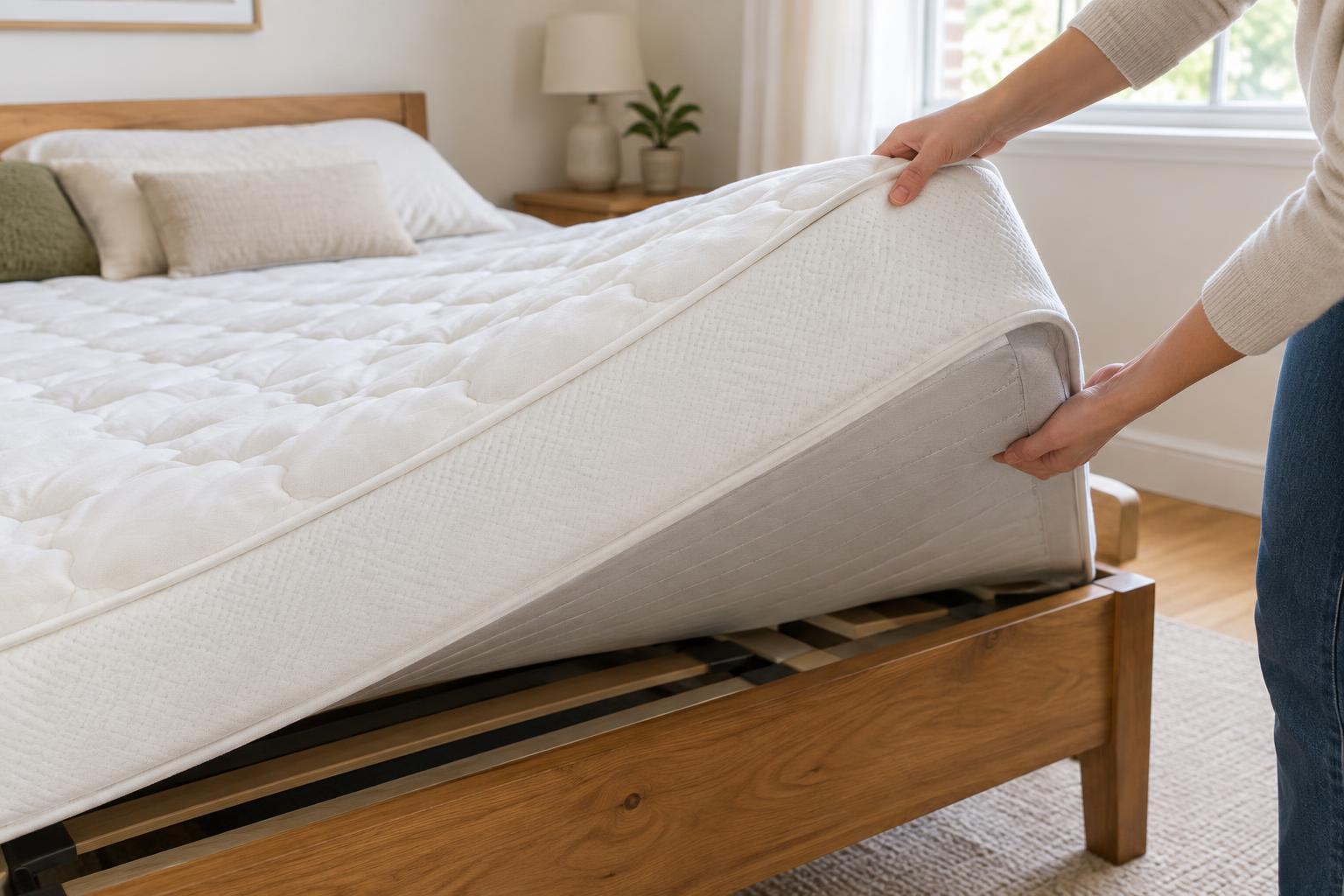
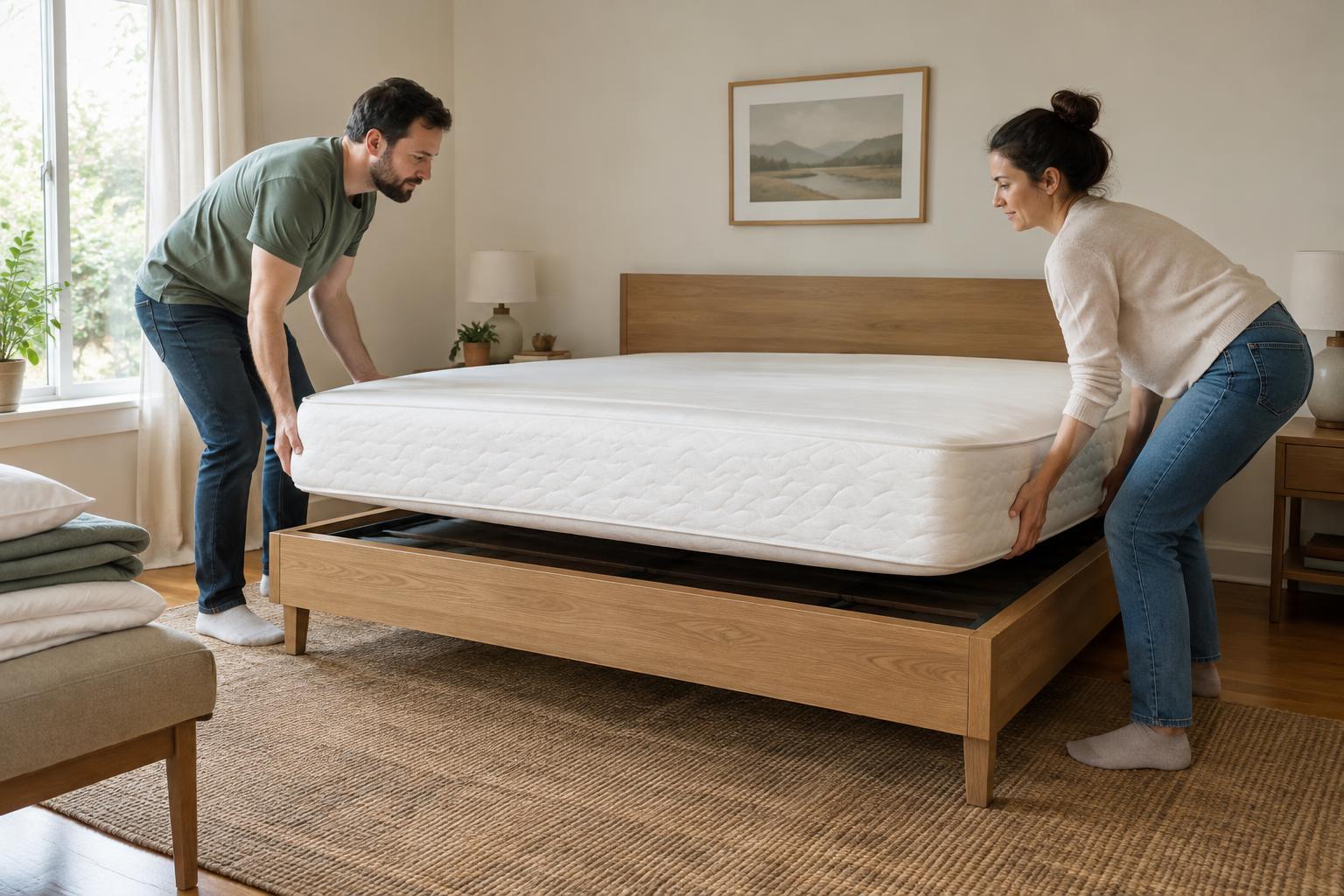
Clear enough space around the bed, remove the bedding, and move nearby lamps or other breakable items. If the mattress is heavy, large, or hard to grip, get another person to help. Lift and guide it in a controlled way instead of sharply folding it or dragging it across the floor. Avoid putting strain on seams, edges, or attached components.
Check what the mattress handles are meant for before using them. On some models, handles help with positioning but are not intended to carry the mattress’s full weight. You may find it easier to move the mattress toward the center of the foundation, turn it, and then slide it back into place. Take care not to let it drop against the bed frame.
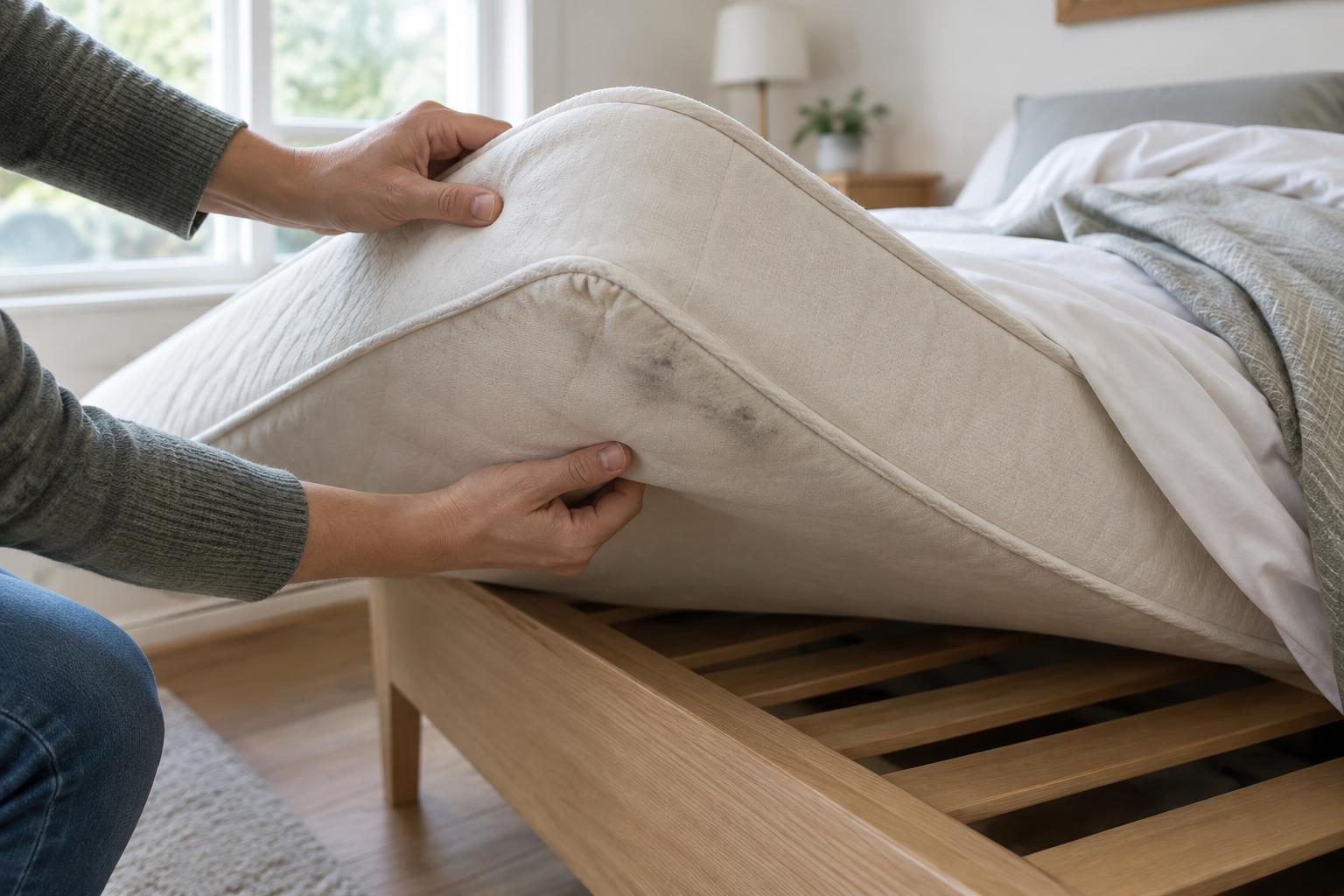
Once rotated, make sure the mattress sits flat and centered on its foundation. Check that slats, panels, or other supports are still correctly positioned. This is also a convenient time to inspect the mattress protector and let the uncovered sleep surface air briefly while you change the bedding.
Make rotation part of sensible upkeep
A simple reminder is usually more useful than trying to judge wear by sight. Record the date each time you rotate so you know which end was where. If your mattress should not be rotated, you can still use that reminder to check its support and follow the maker’s cleaning guidance.
If comfort changes persist after you confirm the mattress is properly supported and cared for, rotation may not be the answer. Review the product’s care and warranty terms for the next appropriate step. The goal is not to move every mattress on a fixed timetable, but to maintain yours in a way that matches its design.