Start with clean, completely dry bedding
Dust and musty odors are easier to prevent than to remove after months in storage. Before putting bedding away, check each item’s care label and clean it as directed. Sheets and washable covers can usually be laundered at home; bulky comforters may need a large-capacity machine or another cleaning method specified by the maker. Even bedding that looks clean can hold body oils or small amounts of residue, so storing it straight from the bed is rarely the best choice.
Drying matters just as much as washing. Moisture trapped in a folded duvet, thick quilt, or pillow can create a stale smell. Feel the center and seams of bulky items rather than judging by the outside alone. If an item still feels cool or damp, give it more drying time using a method its care label permits. Let bedding cool and air out before packing it; warm items can release moisture into a closed container.
Choose a container that suits the bedding
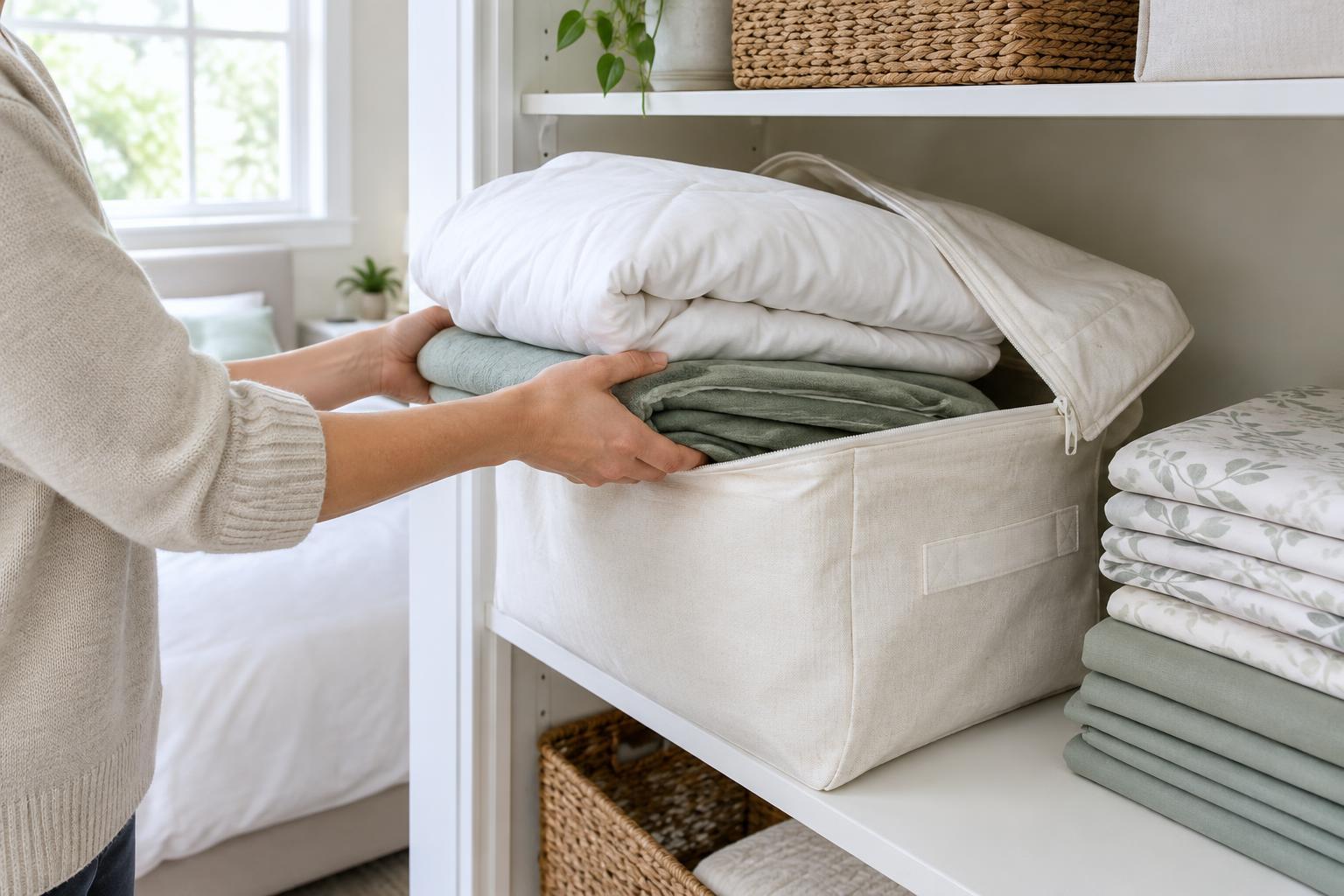
A clean, lidded storage bin helps shield bedding from settling dust. It works best when the contents and the storage area are dry. Wipe out a reused bin and let it dry fully before filling it. For bedding stored in a consistently dry closet, a washable cotton bag or fabric storage case can also keep off dust while allowing some airflow. Fabric bags offer less protection from spills and damp surroundings, so they are not a substitute for a good storage location.
Avoid sealing bedding in a plastic bag if there is any doubt that it is fully dry. Vacuum bags can save space for some sturdy synthetic items, but prolonged heavy compression may make lofty fill slower to regain its shape. For down-filled comforters and delicate quilts, follow the maker’s storage directions and favor a roomy bag or bin that does not crush the fill. Fold items loosely where space allows, and do not overload a container just to make the lid close.
Pick a dry, clean storage spot
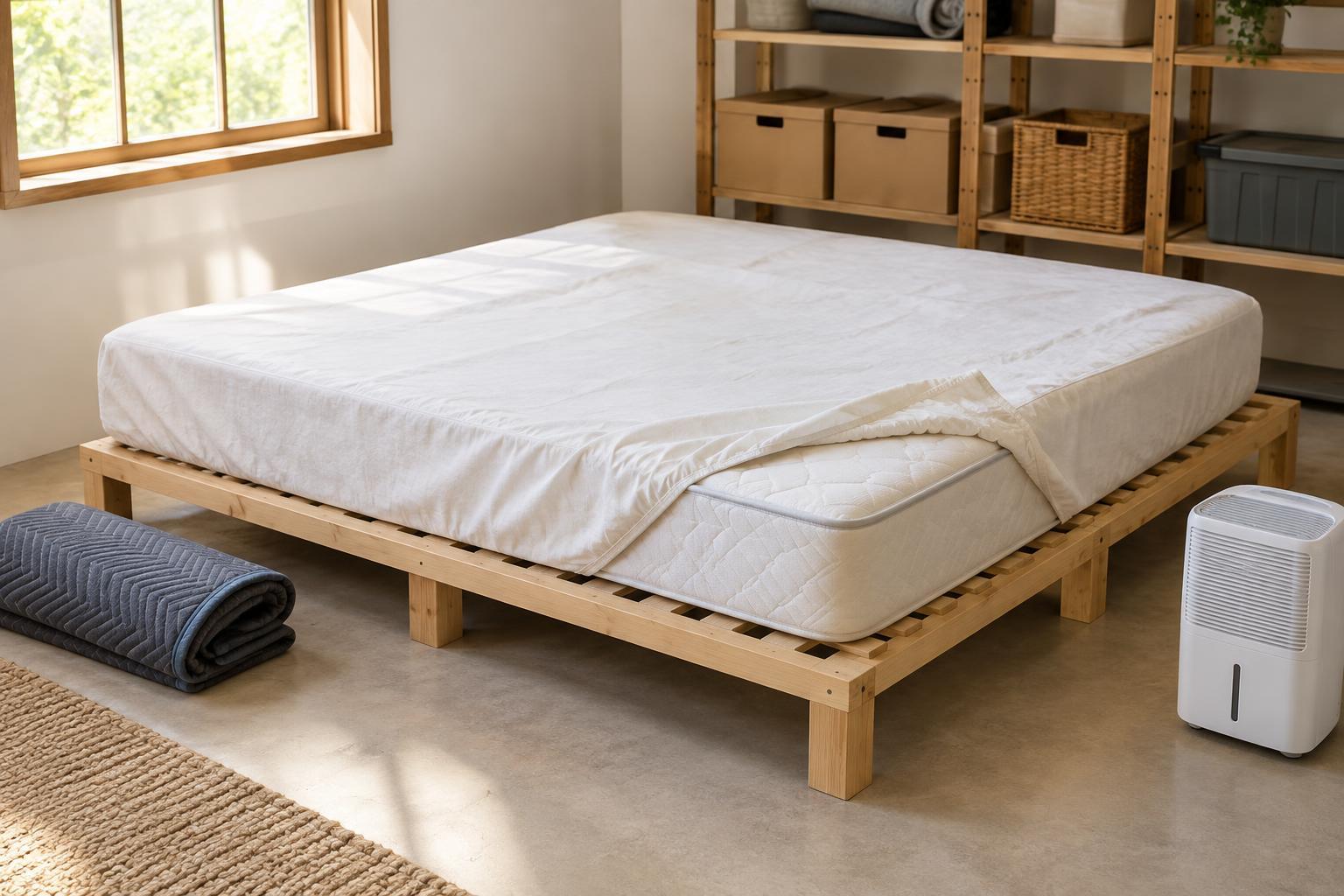
The best container cannot make up for a damp storage space. An interior closet or a dry area under a bed is generally a better choice than a place where bedding may face leaks, condensation, or large changes in temperature and humidity. Check the spot for musty smells or signs of moisture before using it. Keep containers off floors where water might collect, and leave some room around them so you can inspect the area occasionally.
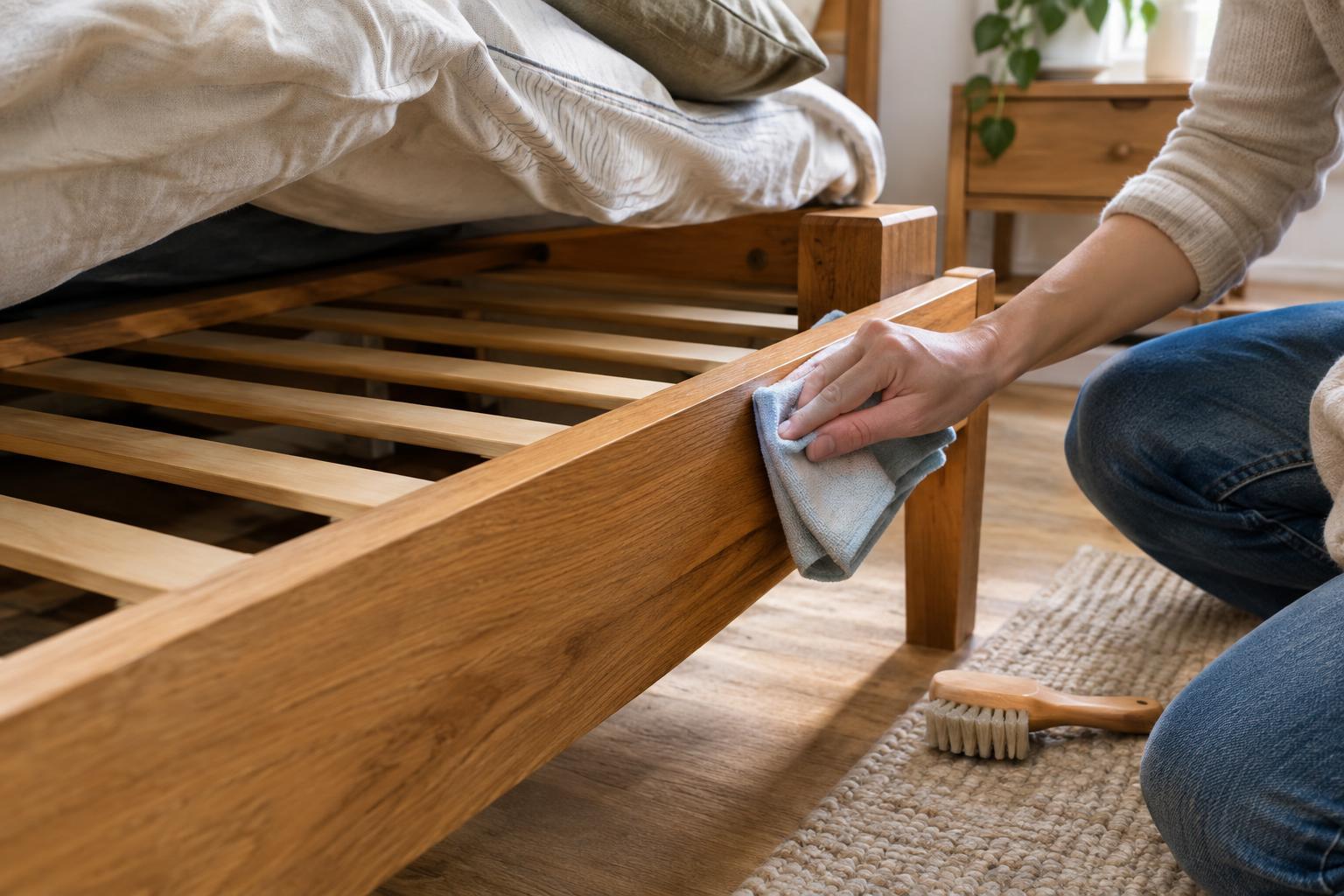
Shelves and closet floors collect dust, too. Clean and dry the surface before placing bedding on it, and avoid stacking loose items beneath stored blankets. If you have noticed insects in the storage area, address that problem before putting textiles there. Keeping bedding clean and contained is a practical first step; fragrant sachets alone will not fix moisture, dust, or pests.
Pack so items are easy to find and use
Group bedding by season, bed size, or set so you do not have to unpack every container to find a pillowcase. A simple label on the outside can list the contents and any item that needs special care. Place heavier pieces at the bottom without pressing delicate fabrics flat, and keep spare sheets together in a clean bag or container. If you use a scented product, keep it from touching fabric directly and make sure its scent will not bother anyone who uses the bedding.
Before closing the container, take a moment to check for a damp corner, an incompletely dried seam, or an item added from the laundry basket. Packing carefully takes less effort than washing an entire stored set again because one piece went in damp.
Check stored bedding and refresh it before use
If bedding will be stored for many months, inspect the storage area from time to time for moisture, dust, or damage. When it is time to change seasons, open the container and let the bedding air out in a clean, dry place. Fluff comforters and pillows according to their care instructions. If an item smells musty, do not cover the smell with fragrance; check for dampness and clean and dry the item as its label directs before putting it on a bed.
A dependable routine is simple: clean, dry, pack, and store in a dry place. The right container helps, but putting bedding away fully dry and keeping it away from moisture do the most to make the next seasonal changeover easier.