What vacuuming can and cannot do
A mattress gathers loose dust, lint, hair and occasional crumbs through everyday use. Vacuuming can lift some of that debris before it settles deeper into the fabric, especially around piping and seams. It is a useful part of routine mattress care, but it does not wash the cover, remove every particle inside the mattress or resolve a persistent odor or stain.
Before you begin, check the mattress care label or manufacturer instructions. Some covers and specialty materials have specific cleaning restrictions. If you notice torn fabric, an open seam or exposed filling, avoid vacuuming that area until you know how to protect or repair it. Suction and attachments can catch loose threads and make damage worse.
Choose a clean attachment and clear the bed
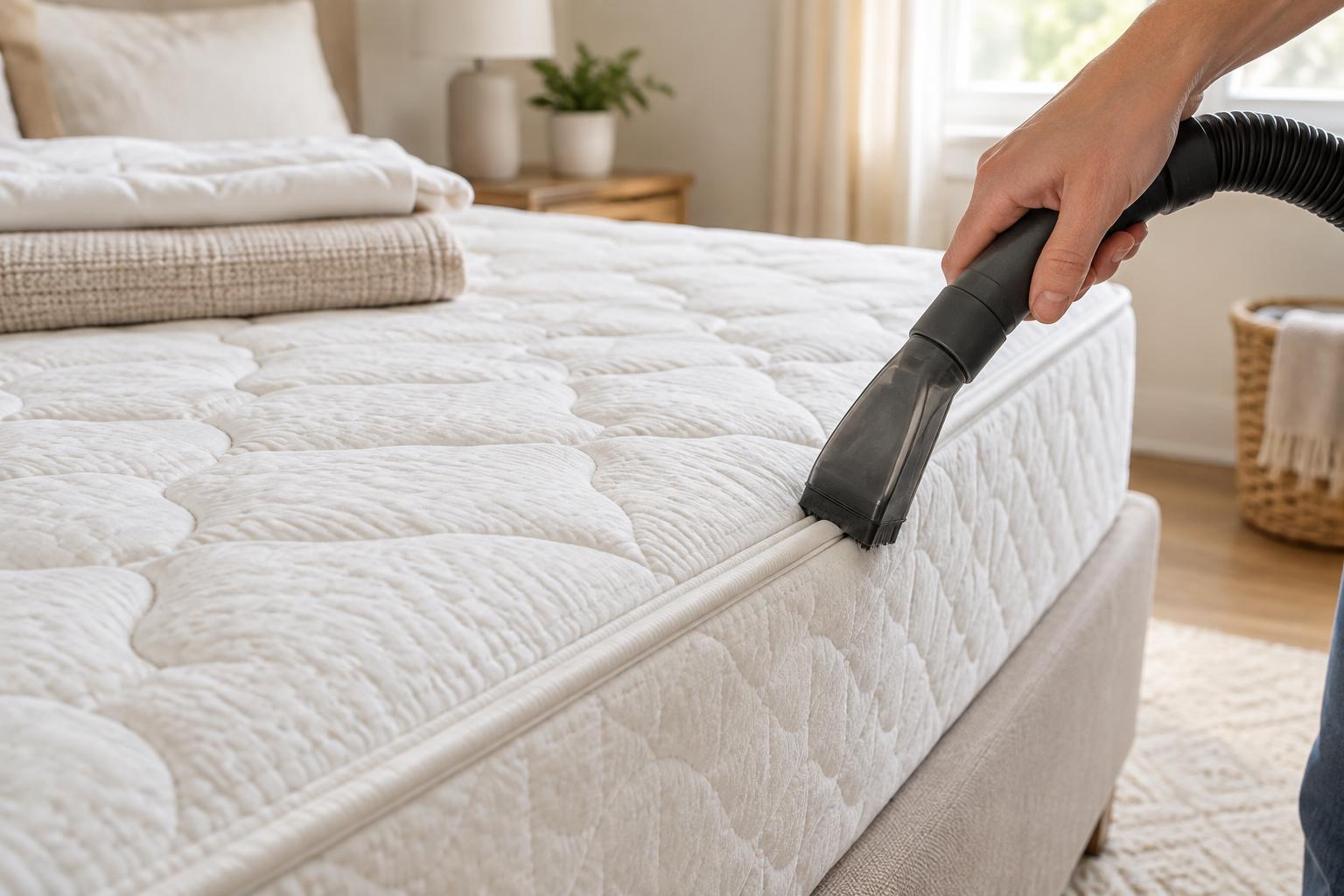
An upholstery attachment with a smooth, clean face is a good starting point for broad surfaces. A crevice tool can reach along edges and into seams, provided its tip is not sharp or rough. Check both attachments for trapped grit that could scratch or snag the mattress cover. Emptying the vacuum container or changing a full bag beforehand may also help maintain steady suction.
Remove sheets, blankets, pillows and any removable protector. Set washable bedding aside for laundering according to its care label. Give yourself room to reach the entire mattress without pulling on its handles or dragging it across the bed frame. If the mattress has a removable cover, do not assume it can be machine washed; follow its label instead.
Use moderate suction if your vacuum allows adjustment. The aim is to collect loose debris, not to pull fabric hard against the nozzle. If the cover lifts, puckers or catches, reduce suction or switch to a gentler attachment.
Vacuum the top, sides and seams
Start on the top surface with the upholstery attachment. Work in slow, overlapping passes from one end of the mattress to the other. Overlap each pass so you do not leave narrow strips untouched. Keep the attachment flat where possible, and use light pressure rather than scrubbing. Pay extra attention to areas where lint tends to collect, such as around tufting or the border.
Next, move around the sides. You may need to adjust your position to reach the edge beside the headboard or wall; avoid bending the mattress sharply to get there. To clean piping, stitched borders and recessed seams, switch to the crevice tool and guide it slowly along each line. Hold it at a shallow angle if that keeps the tip from digging into the fabric. Do not force the tool into a tight seam or tug at stitching.
If you can safely access the underside, vacuum it with the same gentle approach. Follow any instructions about turning or flipping the mattress: many mattresses are designed to be used on one side only. You can still clean accessible edges without turning a heavy mattress on your own.
Handle crumbs, stains and moisture separately
For a few dry crumbs caught in a seam, loosen them gently with a soft brush, then vacuum again. Avoid stiff brushes that might abrade the cover. Do not spread powders over the mattress just to vacuum them up; fine residue can be difficult to remove from fabric and may not suit every vacuum.
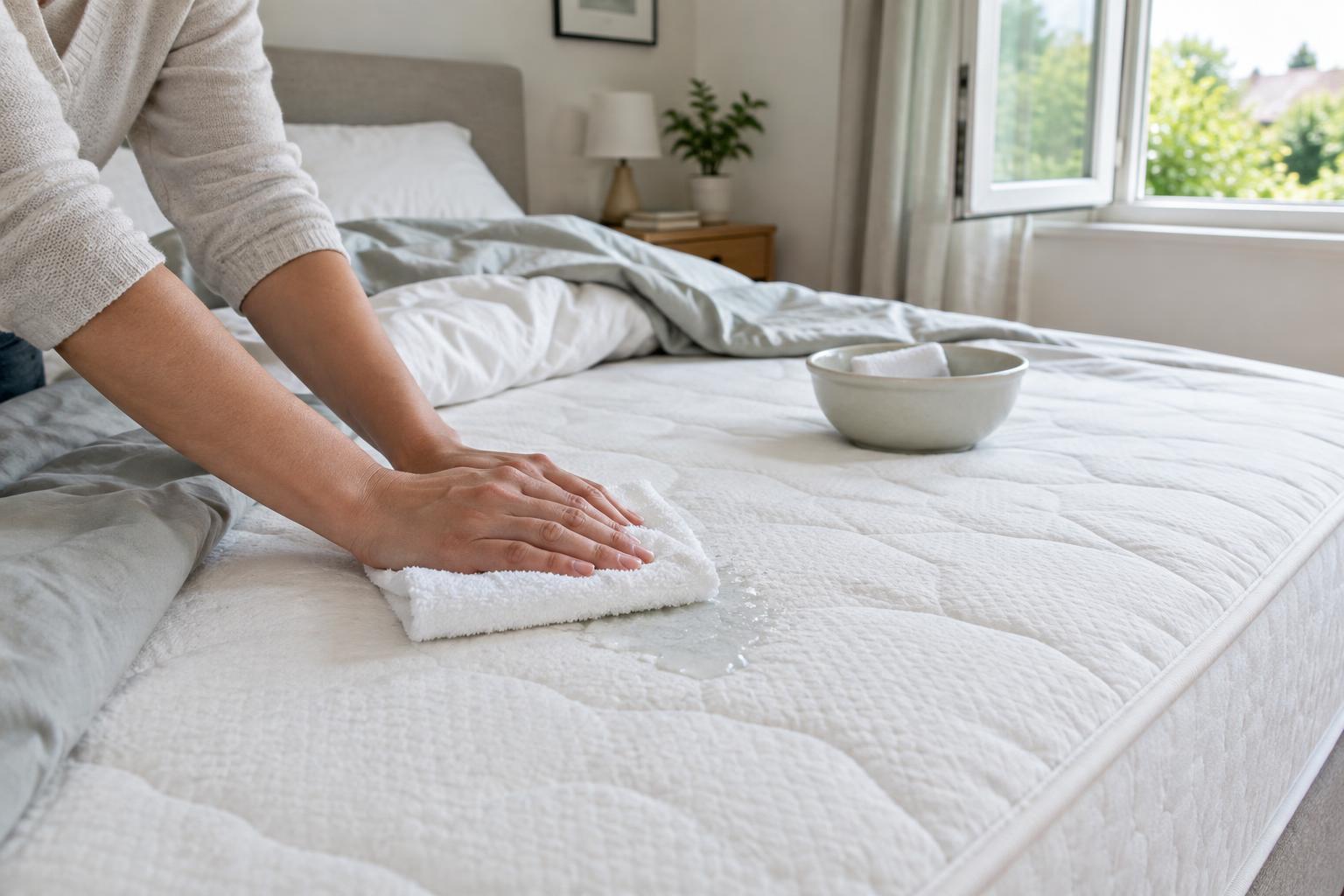
Vacuuming is not a substitute for treating a spill. If the mattress is damp, leave the vacuuming until it is fully dry, unless your appliance and the mattress instructions explicitly permit a different method. For a fresh spill, blot rather than rub, and use only a cleaning method suitable for the mattress materials. Excess moisture can be difficult to remove from a thick mattress. If a mark or odor persists, consult the care instructions before trying stronger products.
Make it an easy care habit
Vacuuming the mattress when you change or wash bedding is one way to remember the task, but there is no single schedule that suits every household. A bed exposed to pet hair or frequent crumbs may need attention more often than one kept under a clean protector. Let visible buildup and your usual cleaning routine guide you.
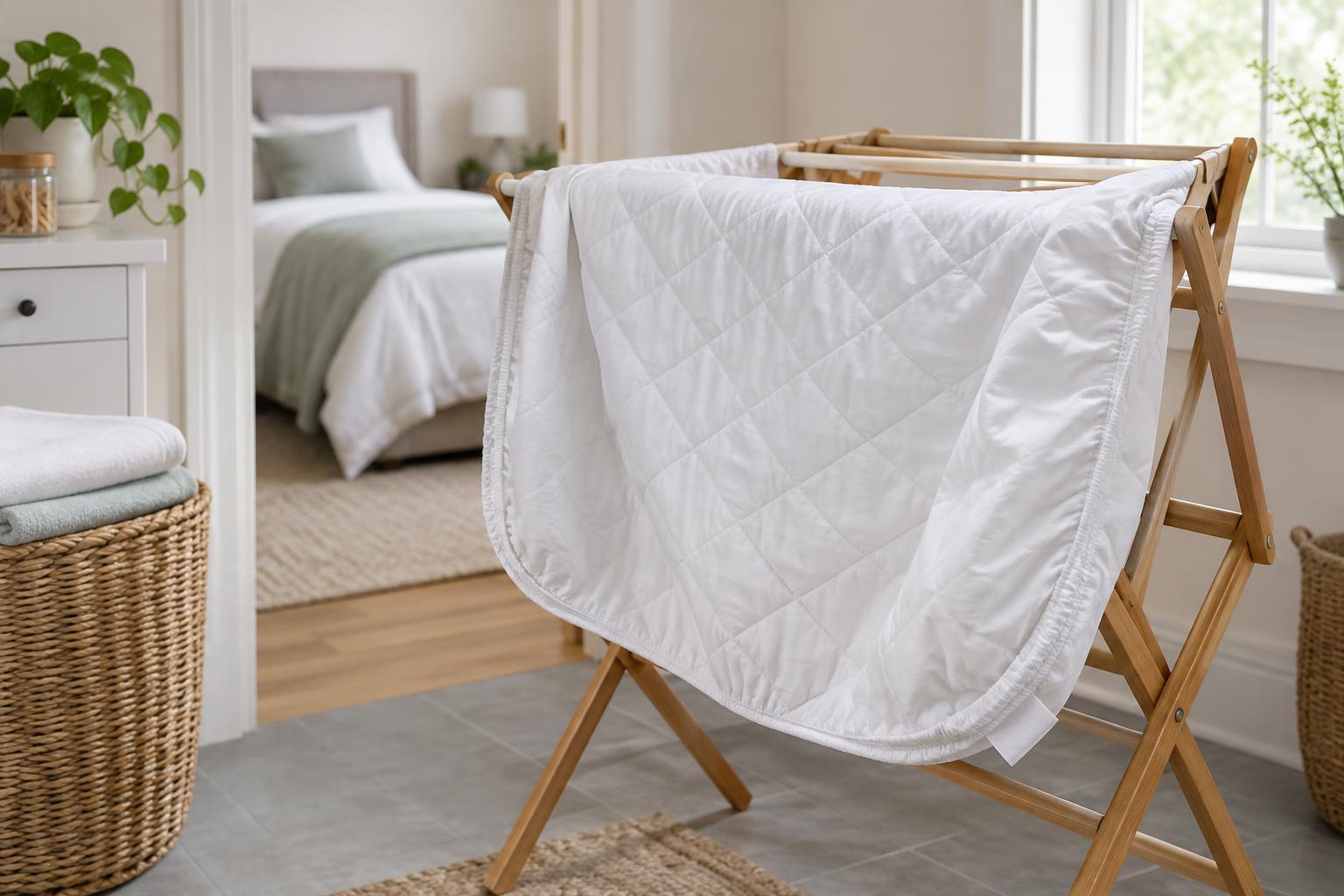
Once the mattress is clean and dry, replace the protector and bedding. A washable protector helps keep everyday debris and spills off the mattress surface, although it still needs regular care of its own. Store the vacuum attachments clean and dry so they are ready for the next pass. Gentle, consistent cleaning is more useful than pressing hard in an attempt to make the mattress look new.