Start with the label—and identify what you are washing
A removable duvet cover and the insert inside it are separate laundry items. The cover may be easy to wash with other bedding, while the bulky insert needs more space and more drying time. Likewise, a comforter with a sewn-on outer fabric must be cleaned according to the label on the comforter itself. Do not assume that instructions for the cover also apply to its filling.
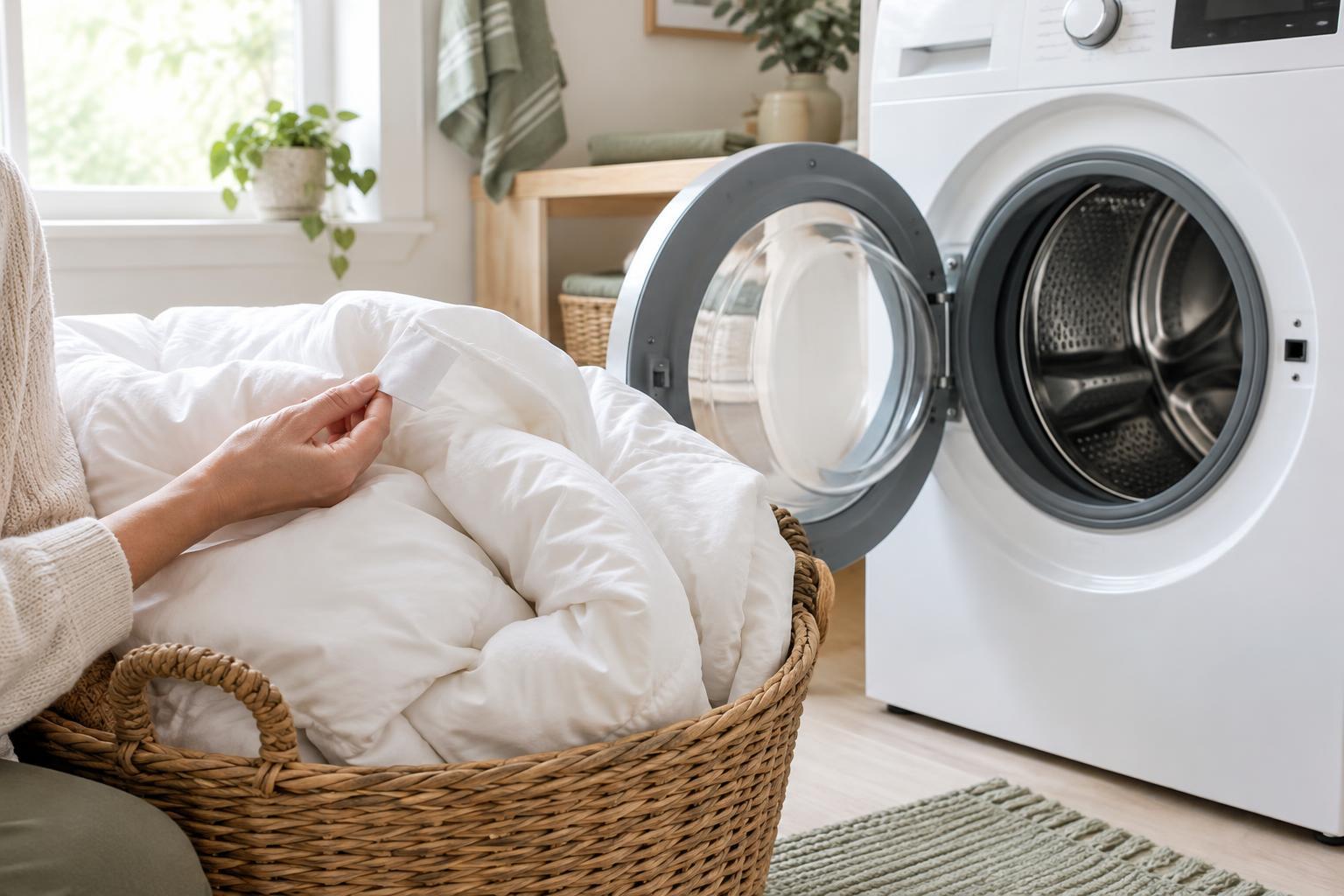
Read the care label before adding water or detergent. Look for washing and drying instructions, temperature limits, and any direction to use professional cleaning. Instructions can differ even between items with similar-looking fill. Down, feather, polyester and other fills may be paired with different shell fabrics, stitching or finishes, so the label is a better guide than the fill name alone. If the label is missing or unclear, start with gentle spot cleaning or ask a cleaner about the item rather than guessing at a full-machine wash.
Check whether the machine has enough room
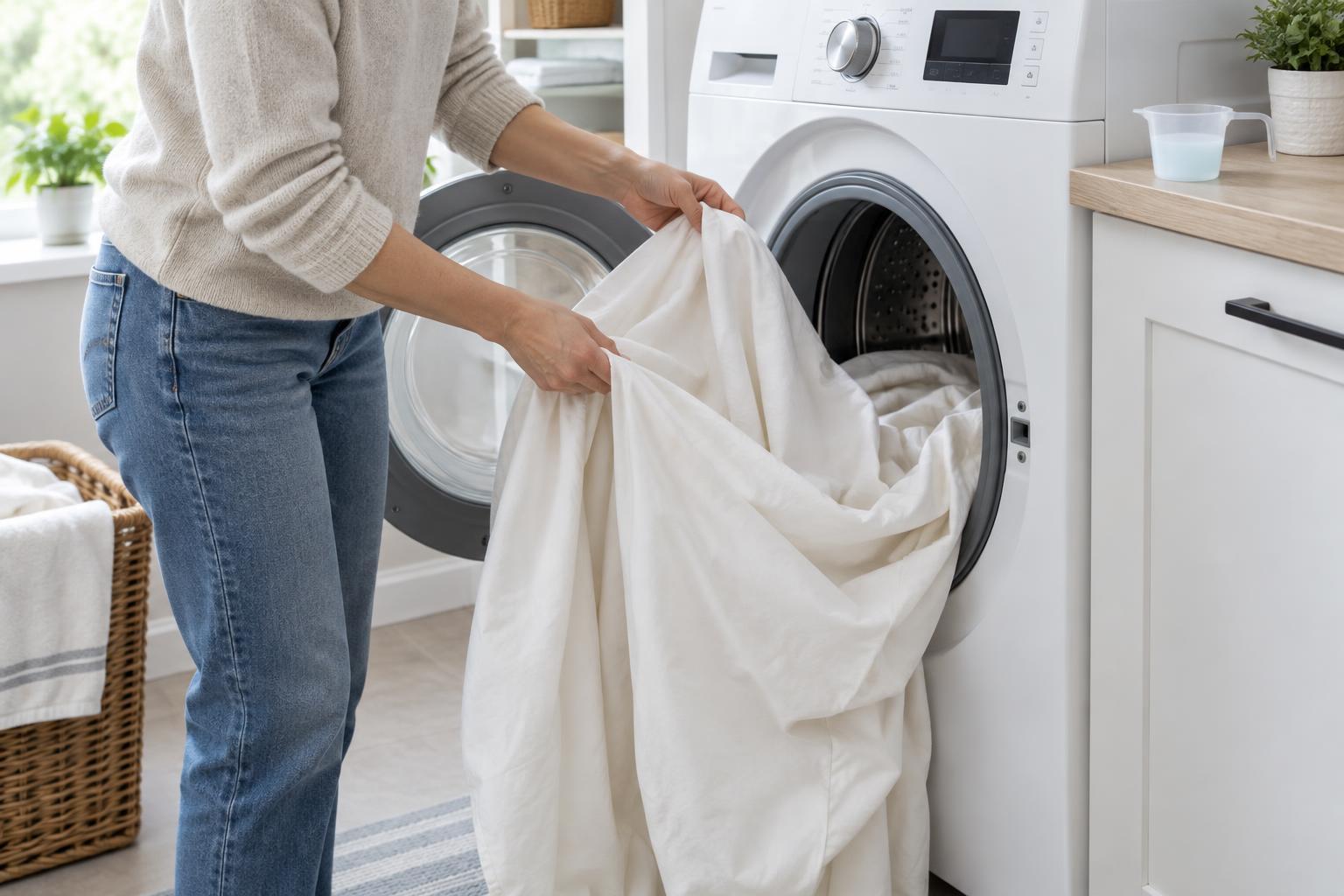
A comforter that fits through a washer door is not necessarily a good fit for the wash cycle. It should sit loosely enough to move as the drum turns and for water to reach the whole item. If it is tightly packed, detergent may remain trapped and parts of the fill may not be cleaned or rinsed well. Forcing an oversized comforter into a machine can also strain the fabric or the appliance.
Check your washer’s guidance for bulky bedding, then assess the item in the drum before starting. Machine capacity ratings alone do not tell the whole story: a thick comforter can occupy far more space than its dry weight suggests. A large-capacity machine at a laundromat may be a better choice, but the same room-to-move test still applies. Plan for drying capacity too; an insert that washes comfortably at one location may be too crowded in your home dryer.
Prepare and wash without crowding
Remove any duvet cover. Inspect the shell and seams for openings that could release fill during washing, and address damage before using a machine. Check for stains and treat them in a way the label allows, using a small amount of suitable cleaner rather than saturating the entire insert. If the care instructions permit machine washing, wash the comforter on its own so it can move freely.
Follow the label’s temperature and cycle directions, and use an amount of detergent appropriate for the machine and load. More detergent is not necessarily better: residue can be difficult to rinse from a thick item. A gentle cycle and an extra rinse may be useful when allowed by the label. After washing, look and feel for areas that seem soapy or unusually heavy. If the item is still holding detergent, another rinse is preferable to sending it straight to the dryer.
Dry the filling all the way through
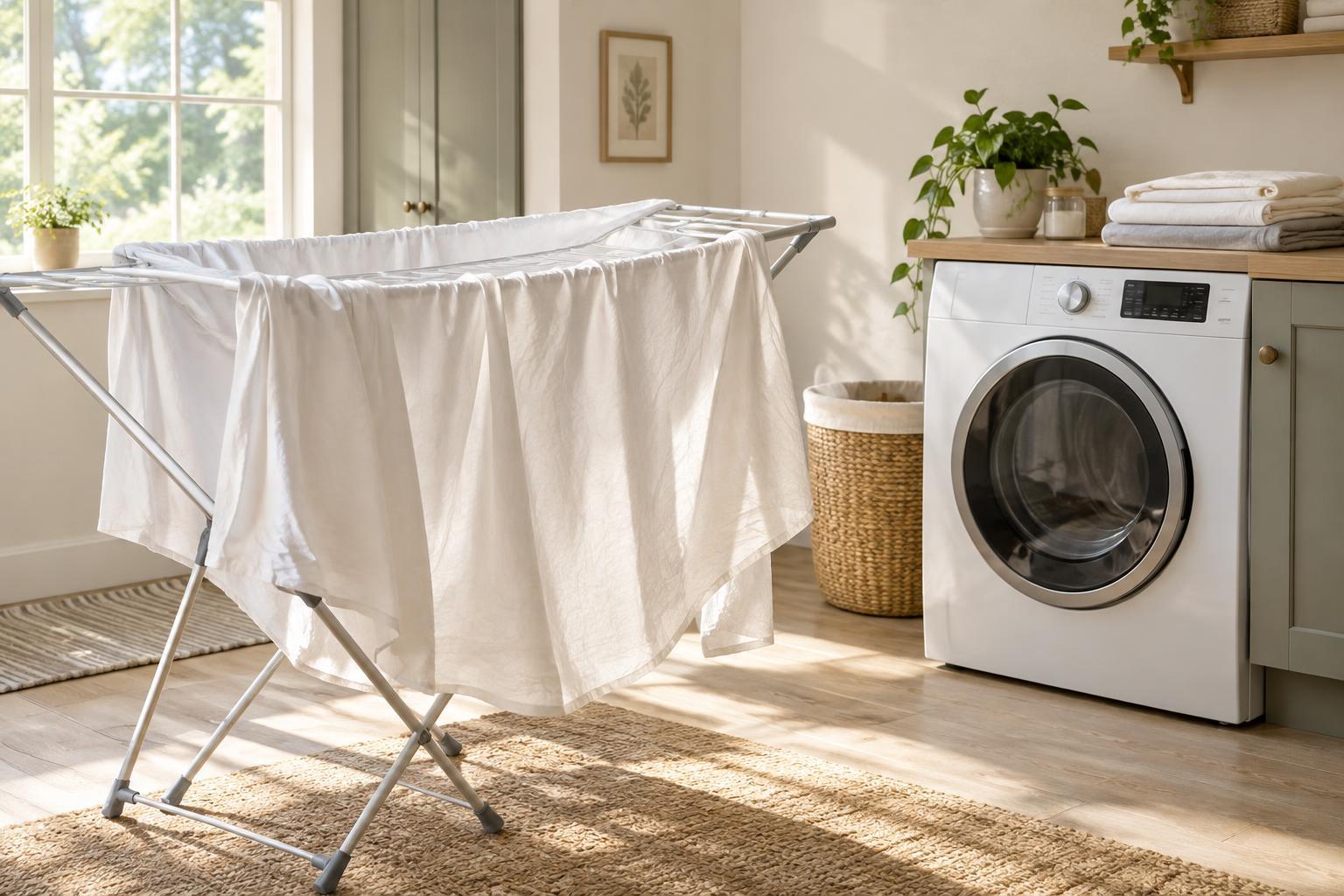
Drying is often the longest part of the job. Follow the label’s dryer instructions and heat limit; high heat can damage some shells or fills. Give the comforter room to tumble. If the label permits tumble drying, pause periodically to redistribute the fill and check for damp spots, especially near seams and corners. Dryer balls may help separate clumps when appropriate for the item, but they cannot make an overloaded dryer effective.
Do not judge dryness by the outside fabric alone. Press into several sections to check whether the filling still feels cool or damp. If it does, continue drying within the label’s limits and check again. Storing or making the bed with a damp insert can lead to musty odors. If your dryer cannot accommodate the item or you cannot dry it thoroughly, use a suitably sized machine or a cleaning service that handles bulky bedding.
Keep it clean between full washes
Full washes are not the only way to care for an insert. A washable duvet cover helps keep everyday contact off the filling, while prompt, label-appropriate spot cleaning can prevent a small spill from becoming a larger job. Let any spot-cleaned area dry fully before putting the cover back on. Airing the insert when practical can also help it feel fresh between cleanings.
Before storing a comforter, make sure it is clean and completely dry. Store it in a breathable space without compressing it so tightly that the fill stays flattened. When it is time for another full wash, repeat the label and capacity checks rather than relying on what worked for a different comforter. The safest cleaning method is the one that suits both the item’s construction and the equipment available.