Start with the protector’s care label
A waterproof mattress protector usually pairs an absorbent or comfortable fabric surface with a layer designed to keep liquid from reaching the mattress. That layer may be a thin polyurethane-type film, a vinyl layer or another waterproof construction. The fabric and barrier can respond differently to heat and cleaning products, so the sewn-in care label is the best starting point. If the packaging and label disagree, follow the instructions attached to the protector or ask the manufacturer before washing it.
Check the permitted water temperature, wash cycle and drying method. Some protectors can be tumble-dried on low heat; others call for air drying. Do not assume that instructions for ordinary sheets apply to a waterproof protector. Remove it from the mattress and look over the seams, corners and underside first. A visible tear, peeling layer or separated seam may already compromise the barrier, and washing will not restore it.
Prepare a gentle, effective wash
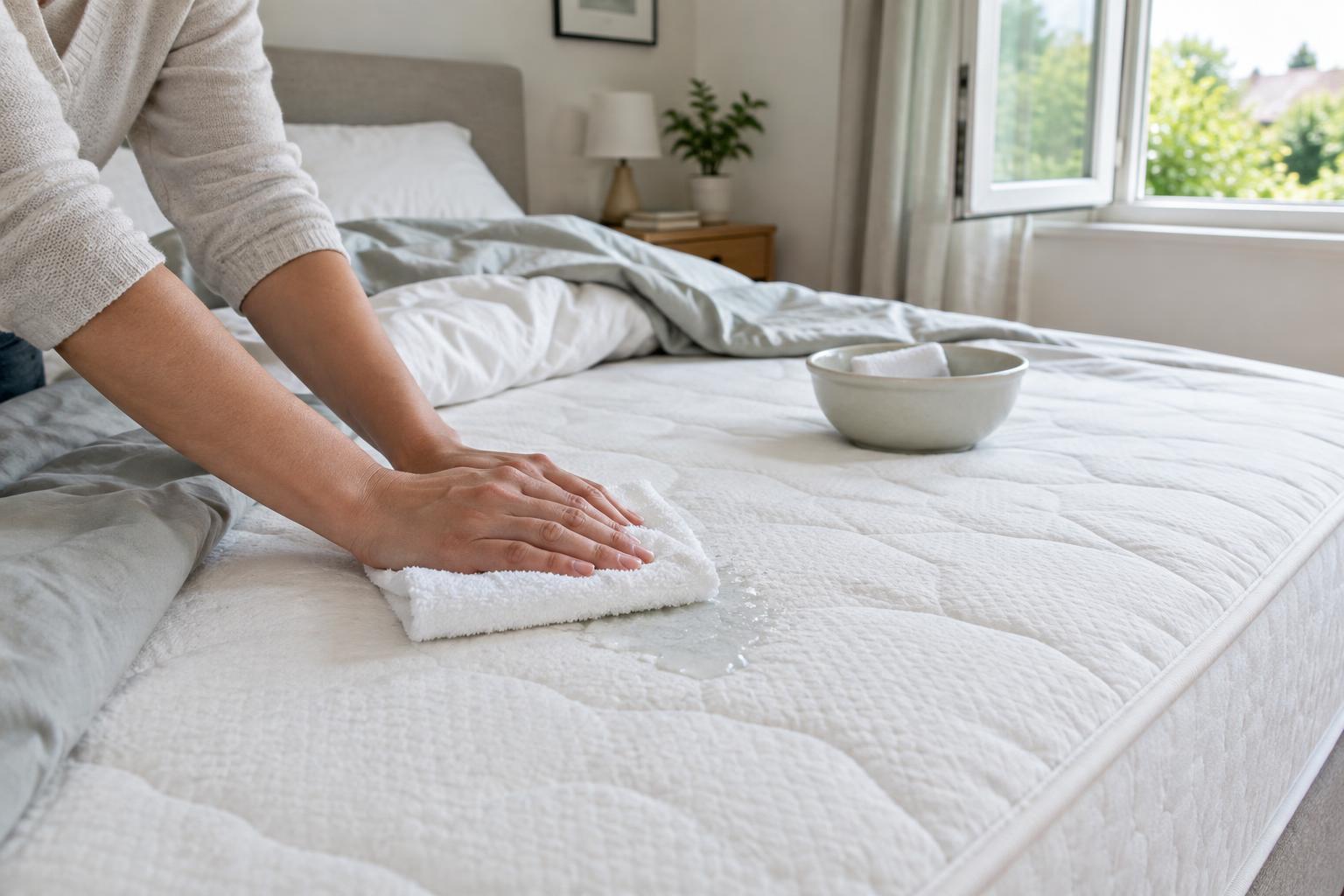
Shake off loose debris and deal with spots before putting the protector in the machine. Blot fresh liquid with a clean cloth rather than rubbing it into the fabric. For a remaining stain, use a small amount of mild laundry detergent and water on the affected area, then follow the label’s guidance for laundering. Avoid vigorous scrubbing, which can stress a thin coating or the bond between layers.
Wash the protector with a mild detergent, using the cycle and temperature allowed by its label. If the label gives a choice, a gentle cycle and cool or lukewarm water are cautious options. Avoid overloading the machine: the protector needs room to move, rinse and drain. Washing it with a few lightweight items may help balance the load, but keep it away from zippers, hooks and other hardware that could snag the surface. Large protectors can become heavy when wet, so make sure the washer has enough capacity.
Unless the care label specifically permits them, skip chlorine bleach, fabric softener and strongly scented laundry additives. Bleach can be harsh on fabrics and finishes, while softener may leave residue. Extra detergent is not a substitute for cleaning time; it can be harder to rinse away. If you notice suds or a slippery feel after washing, run an additional rinse cycle if the label and machine permit it.
Dry it without overheating the barrier
Drying deserves as much attention as washing. High heat may damage a waterproof layer or the way it is bonded to the fabric, even if the top surface looks fine afterward. If tumble drying is allowed, use the setting specified on the label, typically a low-heat option. Remove the protector promptly and check the corners, seams and any padded areas for lingering moisture.
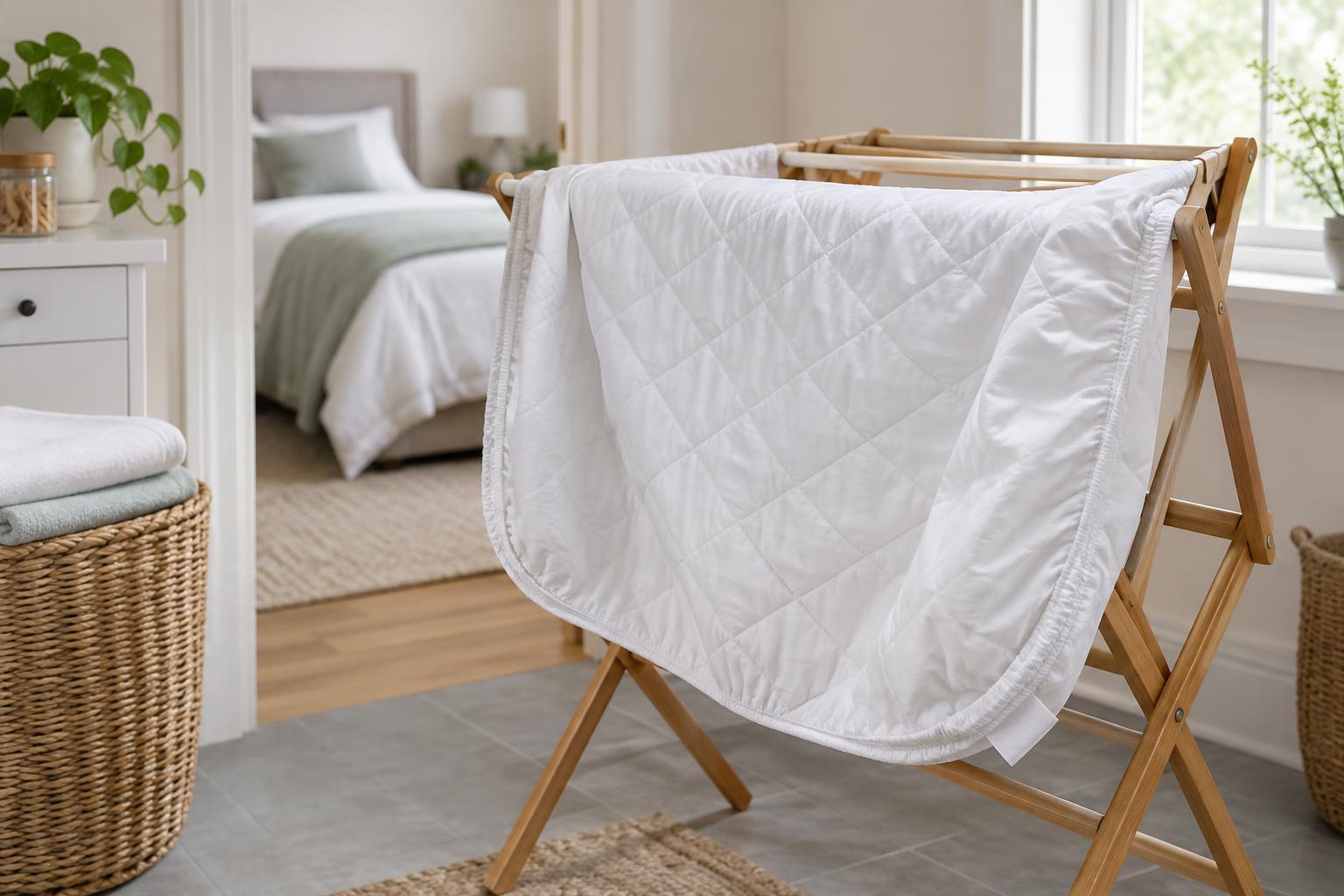
If the label calls for air drying, spread the protector over a suitable rack or line so air can reach both sides. Avoid draping it over a sharp edge that may leave a crease or strain the barrier. Check whether the label cautions against direct sun or heat sources, and do not use an iron unless the instructions expressly allow it. Put the protector back on the bed only when it is completely dry; trapped dampness is unpleasant and can affect the bedding above and below it.
Build a routine that suits your bed
A protector does not need a complicated schedule. Wash it when it is soiled and at intervals that fit how the bed is used, taking the care label into account. More frequent laundering may make sense after spills, heavy sweating or use by children or pets. Keeping a spare protector can make it easier to let one dry fully without leaving the mattress unprotected.
Between washes, change the sheets regularly and check the protector when the bed is stripped. Look for worn elastic, cracked or peeling backing, holes and damaged seams. If a spill occurs, remove the protector promptly and inspect the mattress beneath it. The word “waterproof” does not guarantee protection if liquid gets around the edges, through a damaged area or past an imperfect fit.
Know when cleaning is no longer enough
A clean protector is useful only if its barrier remains intact. After laundering, check for new flaking, bubbling, stiff patches or separation between layers. These signs do not always prove a leak, but they are good reasons to inspect the protector closely and consider replacing it, especially if protecting the mattress from spills is a priority.
For persistent odors or stains, repeat a label-approved wash rather than turning immediately to hotter water or stronger chemicals. If normal care cannot get the protector clean, or its waterproof layer appears damaged, replacement is usually more dependable than trying to repair the coating. Gentle washing, careful drying and occasional inspection offer a straightforward way to keep the protector useful for as long as its construction allows.