Why sheets tangle and feel coated
Sheets are large, flexible pieces of fabric that can wrap around one another as a washer moves. A fitted sheet is especially good at catching pillowcases and smaller items in its elastic corners. Once a bundle forms, water and detergent may have trouble reaching its center, and the bundled fabric may not rinse evenly.
A slippery, stiff or dull feel does not always mean detergent is left behind. Too much detergent is one possible cause, but fabric softener, an overfilled washer, an inadequate rinse or minerals in hard water can also affect how sheets feel. Start with simple changes to the load and detergent amount rather than adding more cleaning products.
Give sheets room to move
Wash sheets separately from towels, jeans and clothing with zippers or hooks. Heavy items can weigh sheets down, while small items can disappear inside a fitted sheet. A sheet set can often be washed together if the machine has enough space, but a bulky duvet cover may need its own load. Close the duvet cover before washing if its care label and design allow it; this can help keep other pieces from collecting inside.
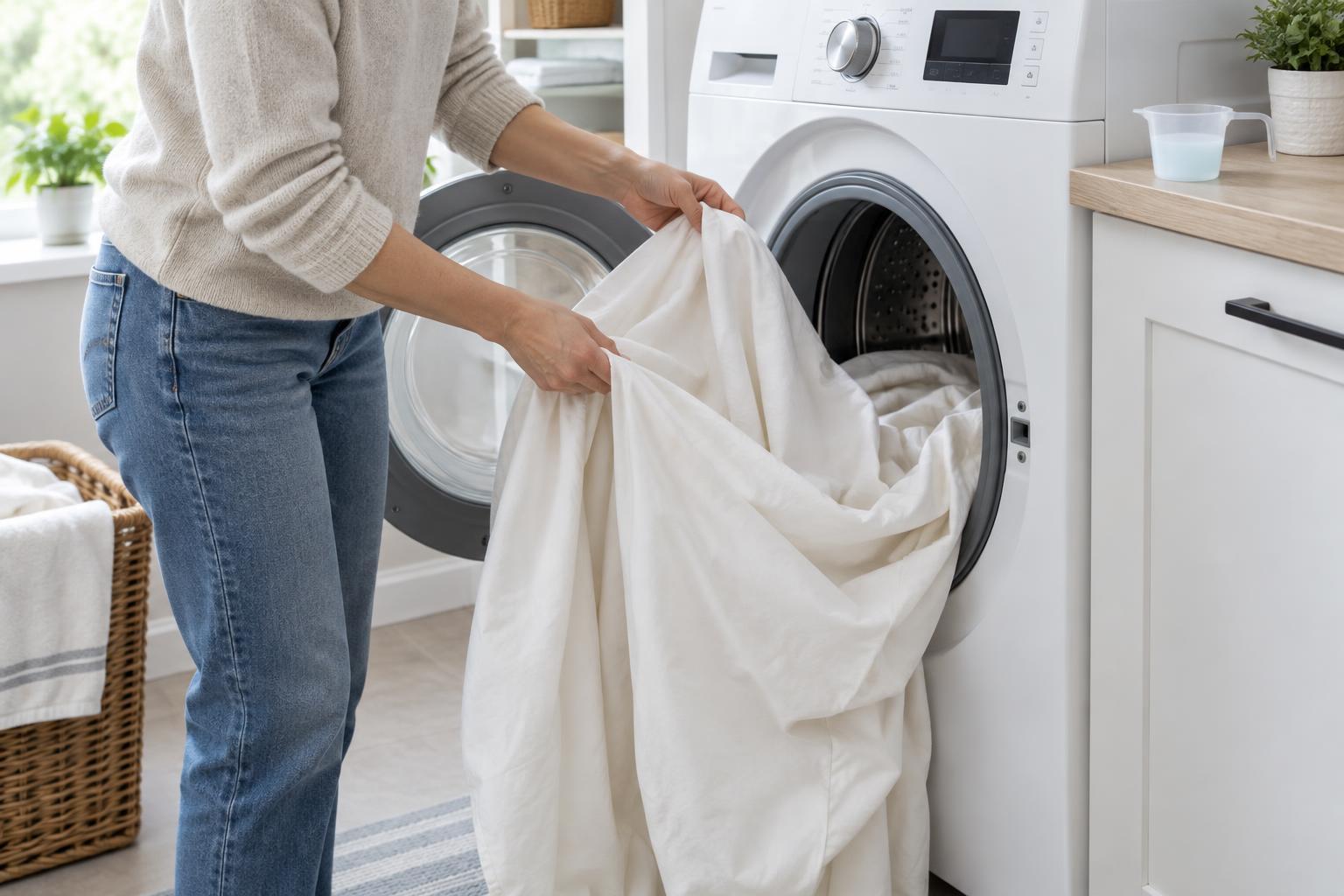
Place each piece loosely in the washer instead of pushing the set in as one bundle. Check the machine’s loading guidance and leave enough space for the fabric to move during the cycle. If sheets regularly come out knotted or have dry patches at the end of a wash, try a smaller load next time. For a fitted sheet, shake out the corners before loading so they are not already holding a pillowcase or part of the flat sheet.
A mesh laundry bag can keep a small pillowcase or delicate item from becoming trapped, but avoid stuffing large sheets into a tight bag. They need room for water to pass through. The aim is a balanced load of loose fabric, not a compact ball.
Use a suitable cycle and a measured dose
Check the care label before choosing water temperature or cycle settings. A normal or bedding cycle may suit many everyday sheets, while delicate fabrics may call for gentler handling. Use the labeled temperature that fits the fabric and the level of soil; hotter water is not automatically better, particularly for sheets with finishes, dyes or elastic.
Measure detergent according to its label and your machine’s instructions, adjusting for load size and how soiled the sheets are. A concentrated product may need less than a familiar-looking capful. More detergent does not necessarily mean cleaner sheets: if the washer cannot rinse it away, it can contribute to a coated feel. Add detergent through the dispenser when your machine calls for it rather than pouring it onto a dry pile of fabric.
If buildup seems likely, try the next wash with a smaller, properly spaced load and an accurately measured dose. An extra rinse can help when sheets still feel soapy, provided the fabric care label permits the wash settings. Skip fabric softener while troubleshooting, since it can leave its own coating and make it harder to tell whether detergent is the problem.
Unwind sheets before drying
Take sheets out promptly when the wash ends. Pull apart any twists, check fitted-sheet corners for trapped items and shake out each piece before putting it in the dryer or hanging it up. This takes little time and gives damp areas a better chance to dry evenly. If a bundle comes out of the wash with an area that still feels slick or looks poorly rinsed, consider running a rinse cycle before drying it.
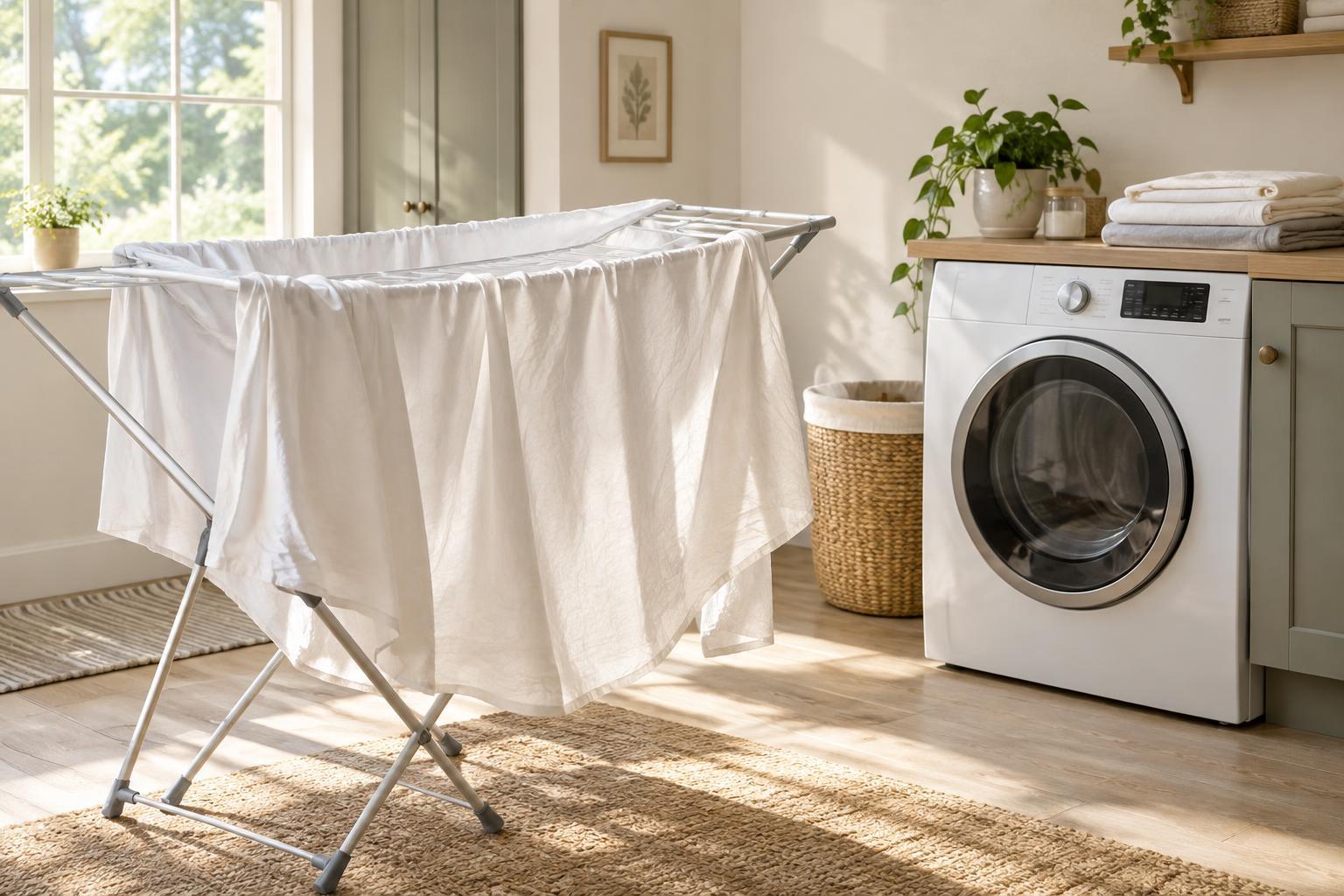
Follow the care label for drying temperature. Avoid packing the dryer so tightly that the sheets cannot tumble, and separate pieces again if you notice them forming a rope or ball. For line drying, spread each sheet so air can reach more than one side. Make sure sheets are fully dry before folding and storing them; damp folds can develop an unpleasant smell.
Make the next wash easier
If tangling happens with every load, change one thing at a time: wash fewer pieces, leave out smaller items or try a different appropriate cycle. If the sheets move freely but still feel coated, check your detergent measurement and whether your washer needs routine cleaning according to its manual. Persistent stiffness may be related to local water conditions rather than an unclean sheet.
Keep the process straightforward: loosen the sheets, allow room in the drum, use a suitable cycle and measure detergent. Those habits address the most common opportunities for tangling and uneven rinsing without requiring a special product or an aggressive wash.