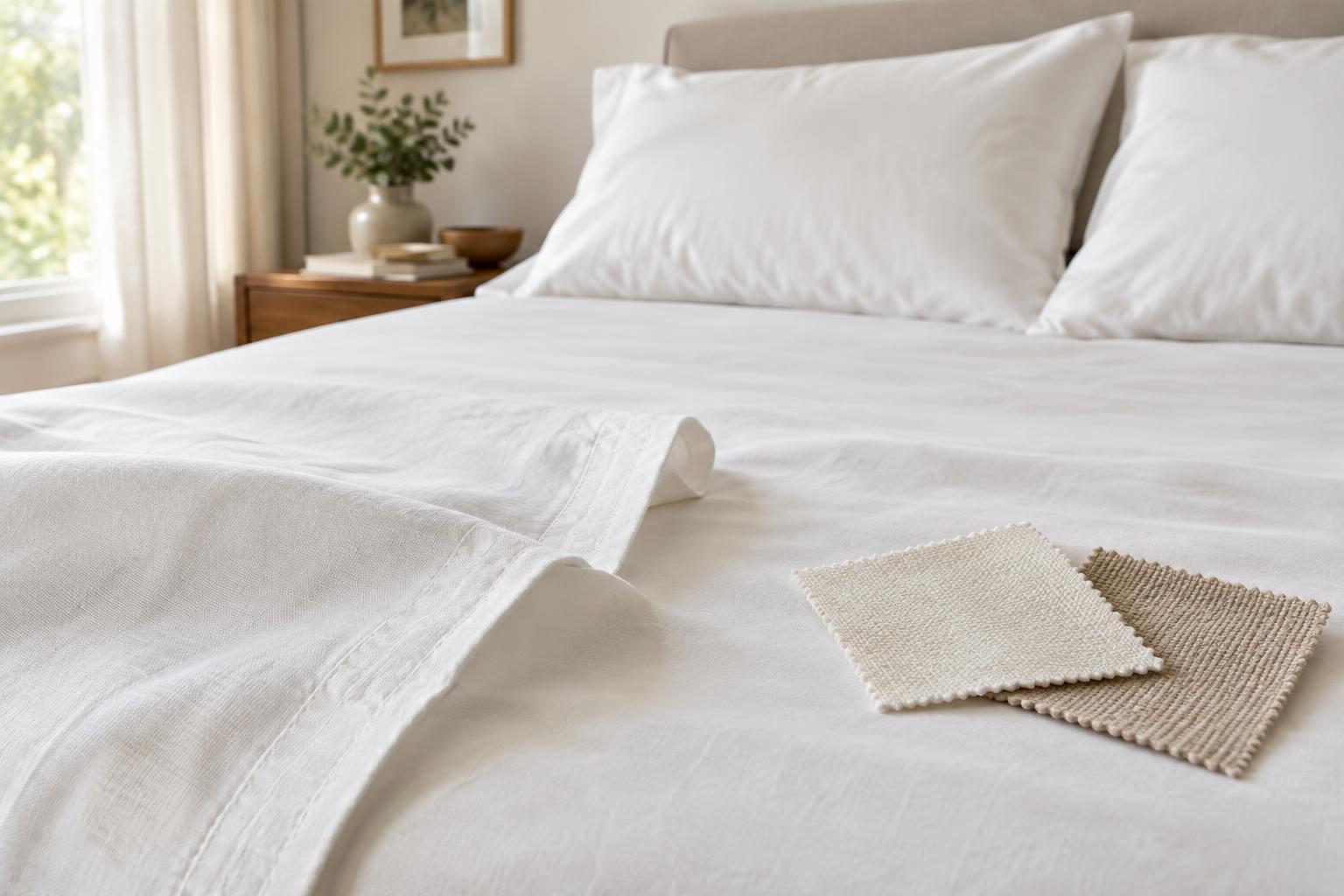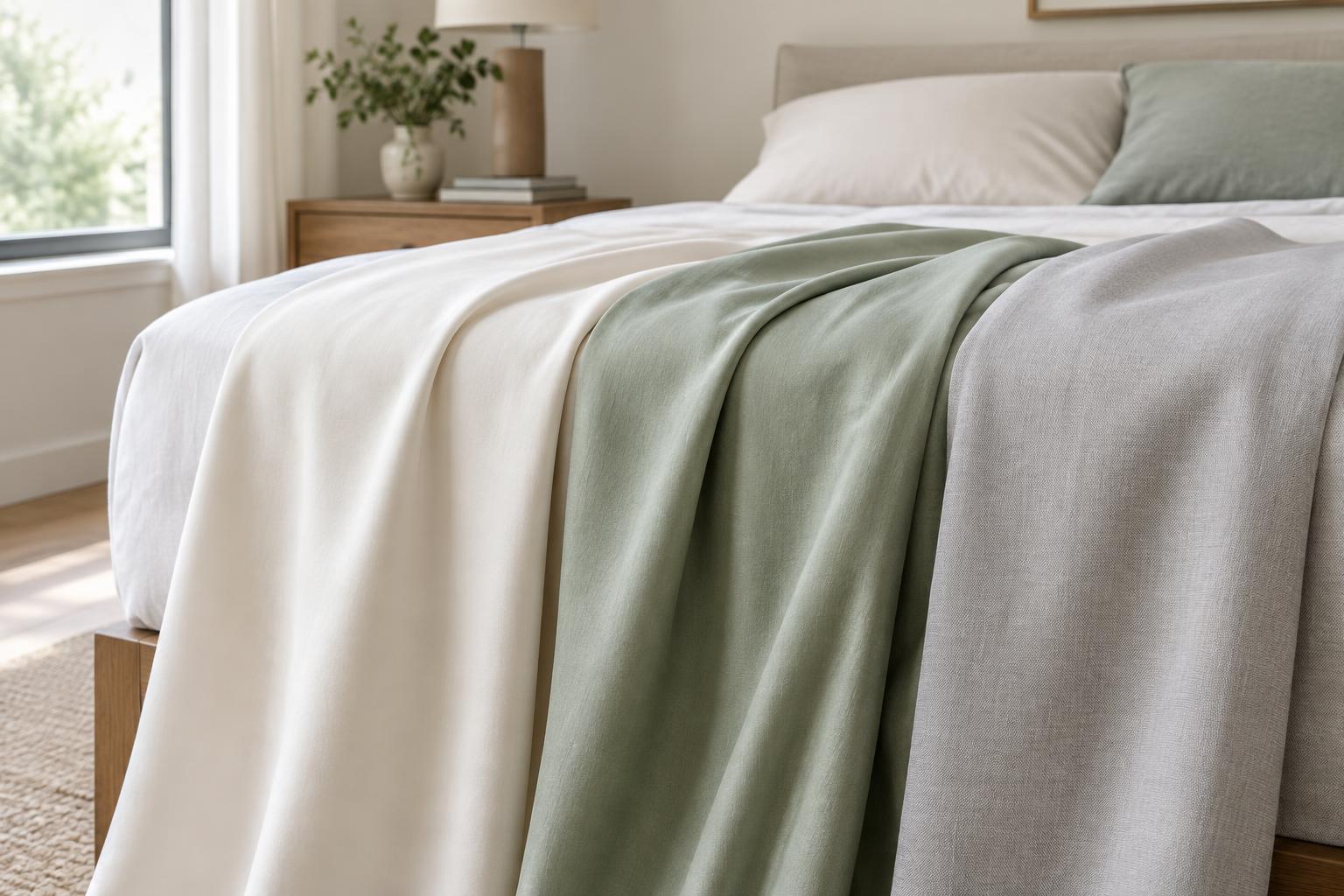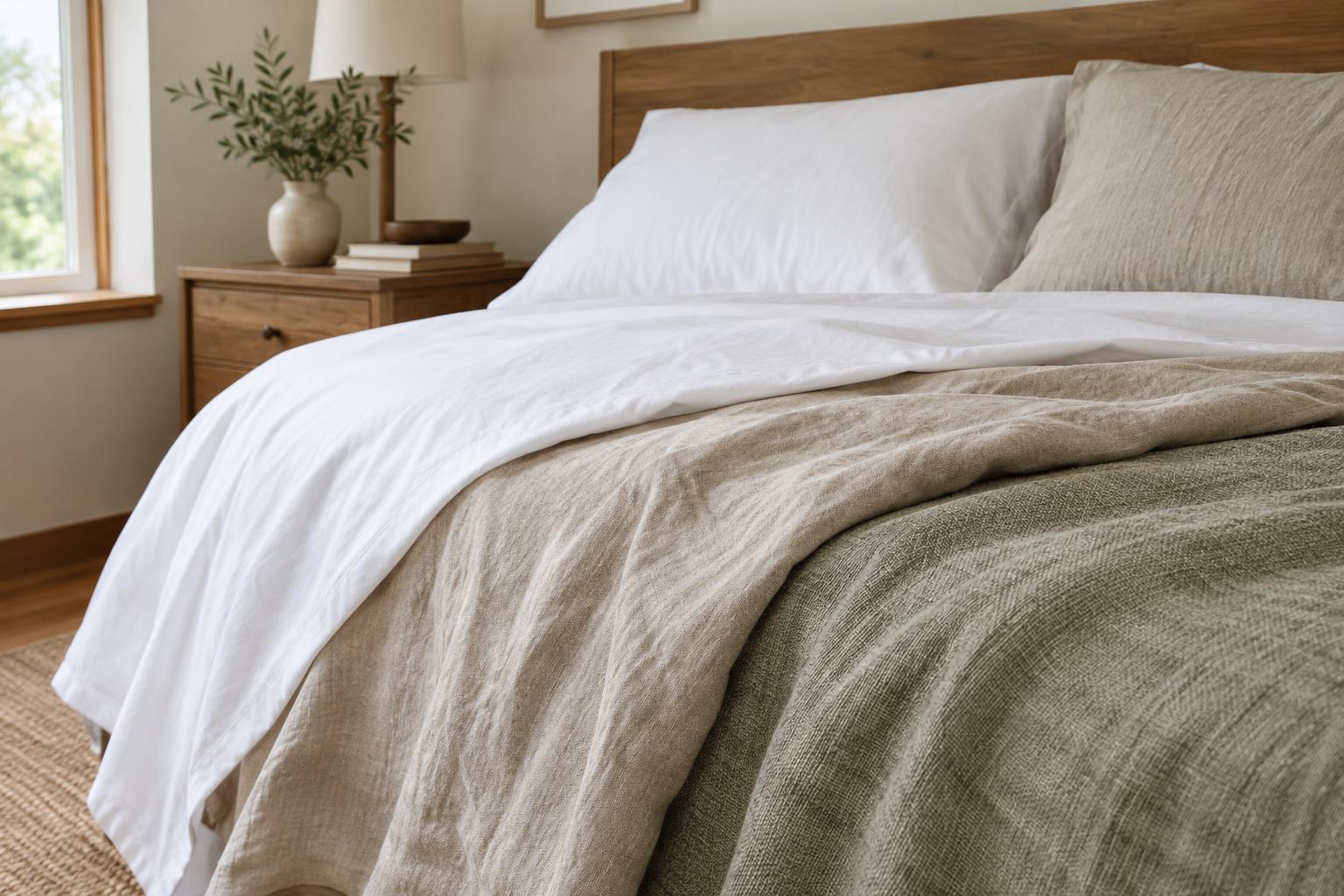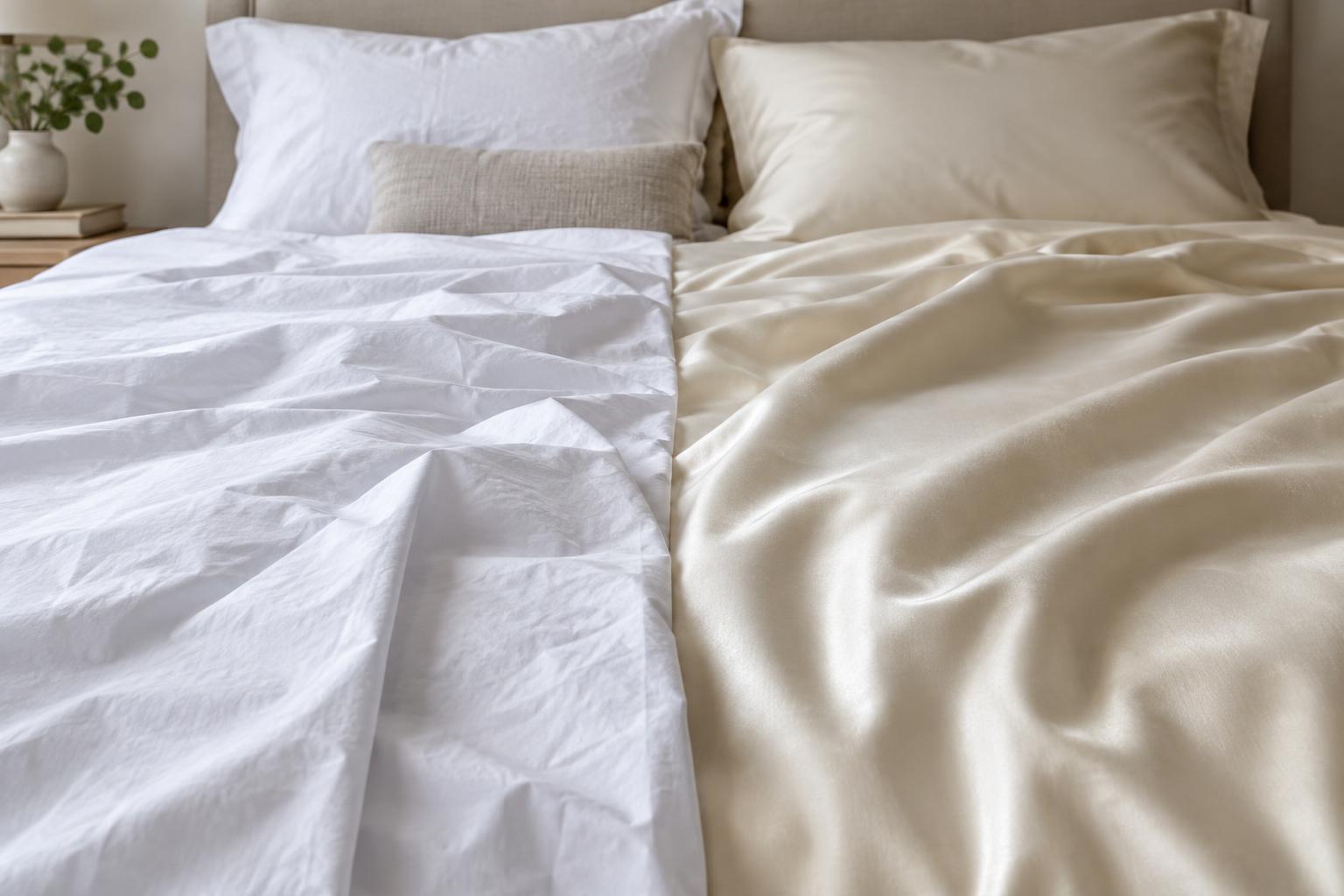
The weave makes the first difference
Percale and sateen are weave names, not fiber names. You can find both in cotton, although the fiber quality, yarn, finishing and fabric weight also affect the result. That is why two sets labeled “percale” may feel different from each other. The weave is a useful starting point, but it cannot tell you everything about a sheet.
Percale uses a simple, closely balanced over-and-under weave. It commonly has a matte appearance and a crisp hand, similar to a freshly washed cotton shirt. Sateen is woven to expose more yarn along the fabric’s surface. Those longer exposed sections, called floats, usually give it a smoother feel, a subtle sheen and a softer drape. Sateen should not be confused with satin, which can be made from many different fibers.
How they feel through the night
Percale often appeals to people who like sheets that feel light, structured and cool to the touch when they first get into bed. Its crispness can soften with laundering without becoming as fluid as typical sateen. It may also rustle more when you move. If you prefer a neatly made bed with a clean, matte look, that structure can be part of its appeal.
Sateen tends to feel silkier against the skin and to fall more closely around the body. Some people find that cozy; others prefer the looser, airier sensation of percale. Neither weave guarantees a particular sleeping temperature. Fiber, fabric weight, room conditions, bedding layers and personal preference all matter. A lightweight sateen may suit one warm sleeper better than a heavy percale, so avoid treating the weave label as a temperature rating.
Wrinkles, snags and everyday wear
Percale’s crisp surface may show wrinkles readily, especially if sheets sit in the dryer or a laundry basket after washing. Its straightforward weave generally makes it a practical choice for regular use, but durability still depends on the yarn and construction. A thin or poorly made percale can wear out sooner than a well-made sateen.
Sateen usually looks smoother straight from the dryer and shows its slight sheen more clearly on a made bed. Its exposed yarn floats can be more vulnerable to snags or surface wear, particularly around rough skin, sharp nails, pet claws or abrasive laundry items. That does not mean every sateen sheet is delicate. It means handling and fabric quality deserve attention if you want the smooth finish to last.
What to check before buying
Start with the fiber content rather than the thread-count headline. Cotton is common in both weaves, but blended fibers can change the feel and care needs. Look for a clear description of the material, weave and washing instructions. A higher thread count is not, by itself, proof that sheets will feel softer, breathe better or last longer. Fabric weight and finishing can be more noticeable in daily use, though product descriptions do not always make those easy to judge.
Check the practical details of the set: fitted-sheet pocket depth, mattress height, elastic coverage and whether the package includes the pieces you need. If possible, feel a fabric sample or consult a return policy before committing to a full set. For an editorial comparison, descriptions of typical weave characteristics are more reliable than a claim that one particular sheet feels best for everyone.
Care for the feel you chose
Follow the label first, since fibers, dyes and finishes vary. Washing sheets with similar fabrics helps protect them from zippers, hooks and other rough items. Avoid overloading the machine so water and detergent can move through the fabric. Use an appropriate detergent amount and rinse thoroughly; residue can make either weave feel less pleasant.
To limit wrinkles in percale, remove it promptly from the dryer and fold or put it on the bed while it is still slightly warm. Handle sateen gently and avoid excessive heat if its care label calls for a lower setting. Rotating between sets spreads out wear. Choose percale if you value a crisp, matte sheet and do not mind some creasing; choose sateen if you favor a smooth, drapey surface and are willing to take a little extra care around snags.