What pillow firmness actually means
Firmness describes how much a pillow resists pressure from your head. A soft pillow compresses easily, a firm pillow resists compression, and a medium pillow falls somewhere between. Those labels are useful starting points, not precise measurements: two brands can call noticeably different pillows “medium.” The amount of fill, the pillow’s shape and the material inside its cover all affect what you feel.
Firmness is also different from loft, which is the pillow’s height before you lie on it. A tall, soft pillow may flatten substantially, while a lower, firm pillow may hold nearly all its height. What matters when you settle in is the height and support that remain under your head. Your mattress plays a part, too. If your shoulder sinks into it, you may need less pillow height than you would on a surface where your shoulder stays higher.
How soft, medium and firm pillows feel
Soft pillows allow your head to sink in and can feel gently cushioned. They may suit someone who wants little height under the head, particularly when sleeping on the stomach. A soft pillow with too little fill, however, can flatten until it offers almost no separation between your head and the mattress. Look at both its starting loft and how much height it retains after you press on it.
Medium pillows offer some give while keeping more of their shape. That balance makes them a reasonable first option if you change positions or do not yet know your preference. “Medium” does not guarantee a particular height: one medium pillow might be low and compact, while another is generously filled. Firm pillows compress less and tend to hold the head higher. They can help fill the space between the head and mattress when you sleep on your side, but a firm pillow that is too tall may push your head upward.
Match the pillow to your sleeping position
For side sleeping, consider the space between your ear and the mattress once your shoulder has settled. A pillow should fill that space without noticeably tilting your head toward the ceiling or down toward the bed. A medium or firm pillow may hold its height better in this position, though a fuller soft pillow could also work. Shoulder width and mattress cushioning can change the height you need.
Back sleepers often prefer enough support to keep the head from dropping far backward without lifting the chin sharply toward the chest. A medium pillow with moderate loft is one place to start, but a low, firm design or a fuller soft one may feel better. Stomach sleeping generally calls for less height because the head is already turned to one side; some people prefer a thin, soft pillow or no head pillow. If you move between positions, prioritize the position you spend the most time in and check that the pillow remains workable in the others.
Why fill and construction change the result
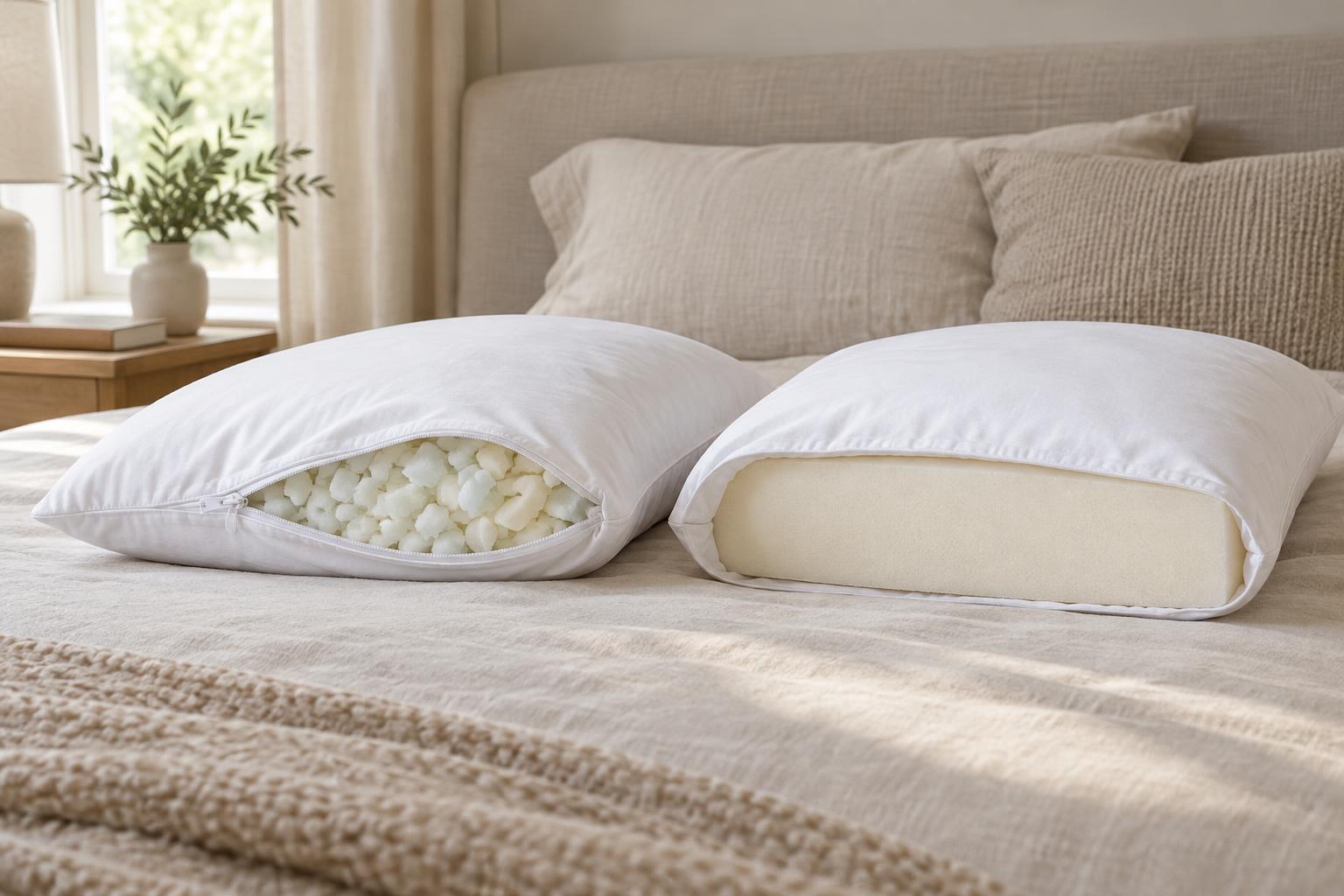
The same firmness label can feel different across materials. Loose down or down-alternative fill can be fluffed and shifted, so support depends partly on how densely the pillow is filled. Shredded foam can also be rearranged; some designs let you remove fill to adjust the height. Solid foam usually keeps a more defined shape, while latex generally feels springier than many foams. These are broad tendencies, not promises about every product.
Pay attention to details beyond the fill name. A gusseted edge may help a pillow keep a fuller profile, while a contoured shape creates different heights across its surface. A tightly packed pillow can feel firmer than one with less of the same fill. If the maker lists dimensions, check whether they describe the pillow before compression. Size alone will not tell you how high it will sit once you lie on it.
A practical way to choose and reassess
Start with your usual sleep position and the loft of your current pillow. Notice whether your head feels tipped up or down, or whether the pillow goes flat during the night. When comparing replacements, narrow the choice by compressed height as well as firmness. If you can try a pillow, lie on it in your usual position for more than a moment and allow your shoulder to settle into the mattress. Ask someone to look at your head position from behind, or take a simple photo, rather than judging the pillow only by how it feels in your hands.
Before buying, check the return terms and care label, especially if the pillow has adjustable fill or a washable cover. At home, give yourself a few nights to assess a new shape, but do not assume you must keep one that consistently feels too high or too low. Fluff loose-fill pillows as directed and replace a pillow when it no longer returns to a useful shape. Firmness is a preference and a fit decision, not a quality grade: the best choice is the one that provides a comfortable, appropriate height on your bed.