Start with the job you want the layer to do
A quilt, coverlet or bedspread can make a bed look finished, but the best choice depends on what happens after you turn out the light. Do you want a layer to sleep under, a decorative finish over other bedding, or something that hides the sides of the bed? Decide that first. Product names are not used consistently by every seller, so the dimensions and construction tell you more than the label alone.
Think about warmth separately from appearance. A top layer that looks substantial may be light, while a compact quilt may provide enough warmth for some sleepers. Your sheets, any blanket or duvet underneath, room conditions and personal preference all affect how a layer feels. If you tend to change your bedding as the seasons change, a layer that is easy to fold, store and combine with others may be more useful than an all-in-one choice.
What makes a quilt different?
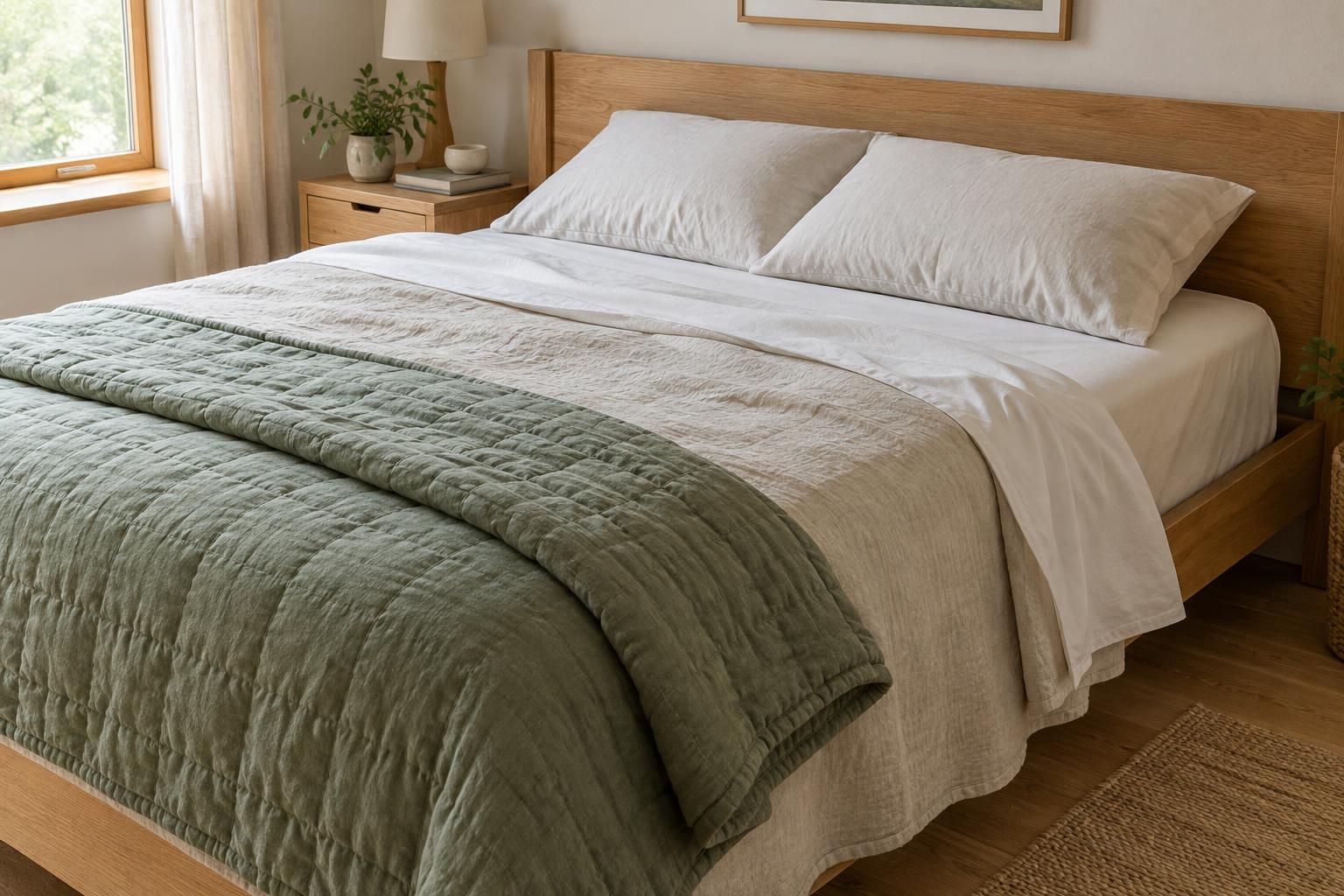
A quilt usually has a front fabric, a backing and a layer of filling held together by stitching. That stitched construction helps keep the layers in place and gives a quilt its familiar patterned texture. Filling and fabric vary: a thin cotton-filled quilt, for example, may feel quite different from one with a loftier synthetic fill. Check the product description rather than assuming every quilt has the same weight or warmth.
A quilt often works as a sleep layer on its own in milder conditions or alongside a blanket when you want more flexibility. It can also serve as the visible top layer, folded back to show the sheets. If you plan to sleep under it every night, pay particular attention to how its fabric feels, whether its weight suits you and whether its care instructions fit your laundry routine.
Where coverlets and bedspreads fit
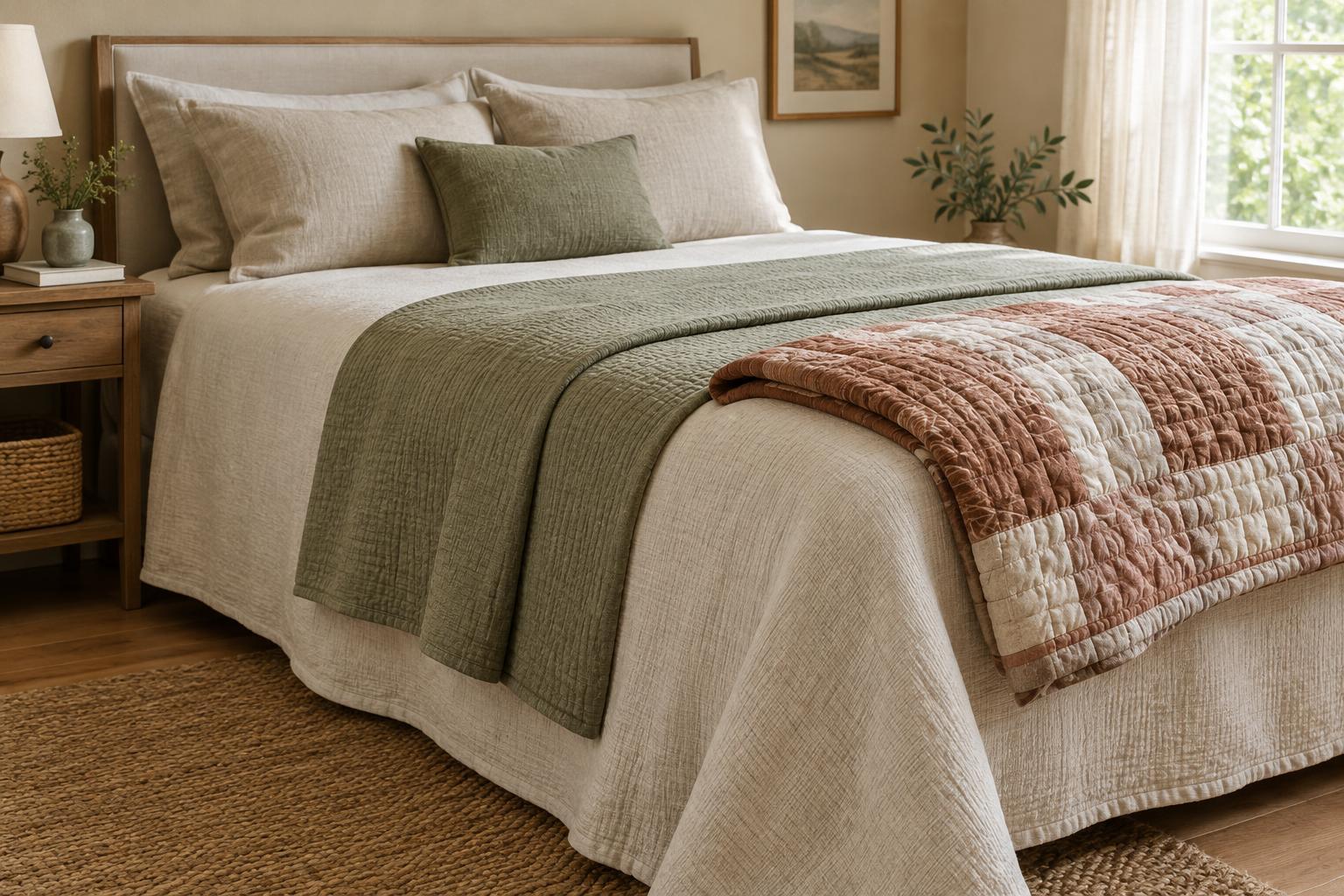
A coverlet is generally a relatively light decorative layer sized to cover the top of the mattress and hang partway down its sides. Some are woven as a single fabric; others have multiple layers or quilting. A coverlet can keep the bed looking tidy without adding as much bulk as a thicker quilt. You can sleep under one if its feel and warmth suit you, or place it over a duvet and remove it at bedtime.
A bedspread is usually chosen for fuller coverage. It is often long enough to hang close to the floor, concealing the mattress sides and sometimes the bed base. That makes it useful if you prefer a smooth, continuous look without a separate bed skirt. The extra fabric also means more to arrange each morning and potentially more to wash. Measure before buying, especially if you have a tall mattress, a high bed frame or a visible footboard.
Compare coverage, feel and upkeep before buying
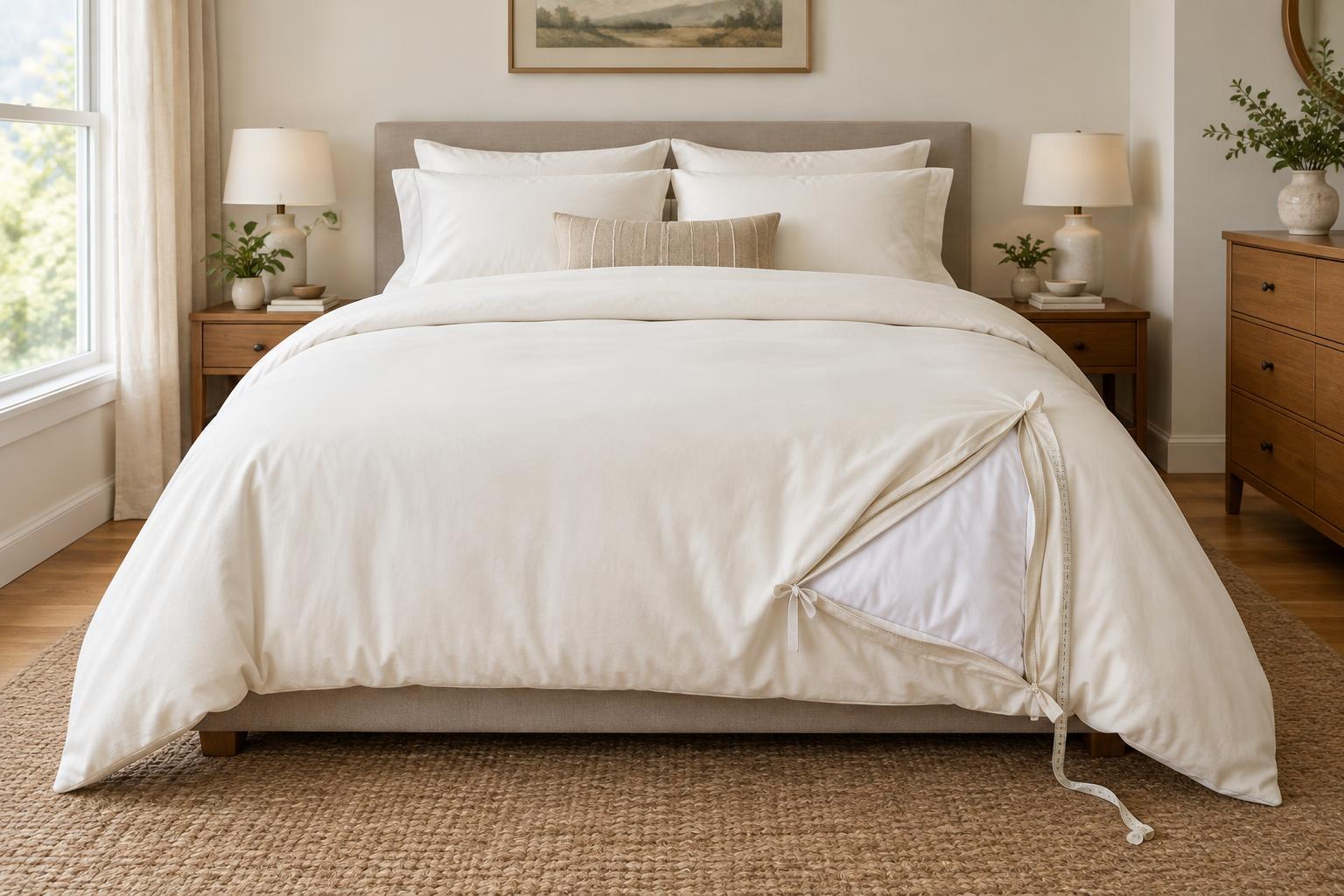
Start with the actual measurements of your bed, including mattress height. Compare them with the listed width and length of the top layer, then consider how much drop you want on each side and at the foot. A product marked for your mattress size may not hang as pictured if your mattress is especially deep. For a bedspread, also check the distance from the top of the mattress to the floor so the fabric does not drag more than you intend.
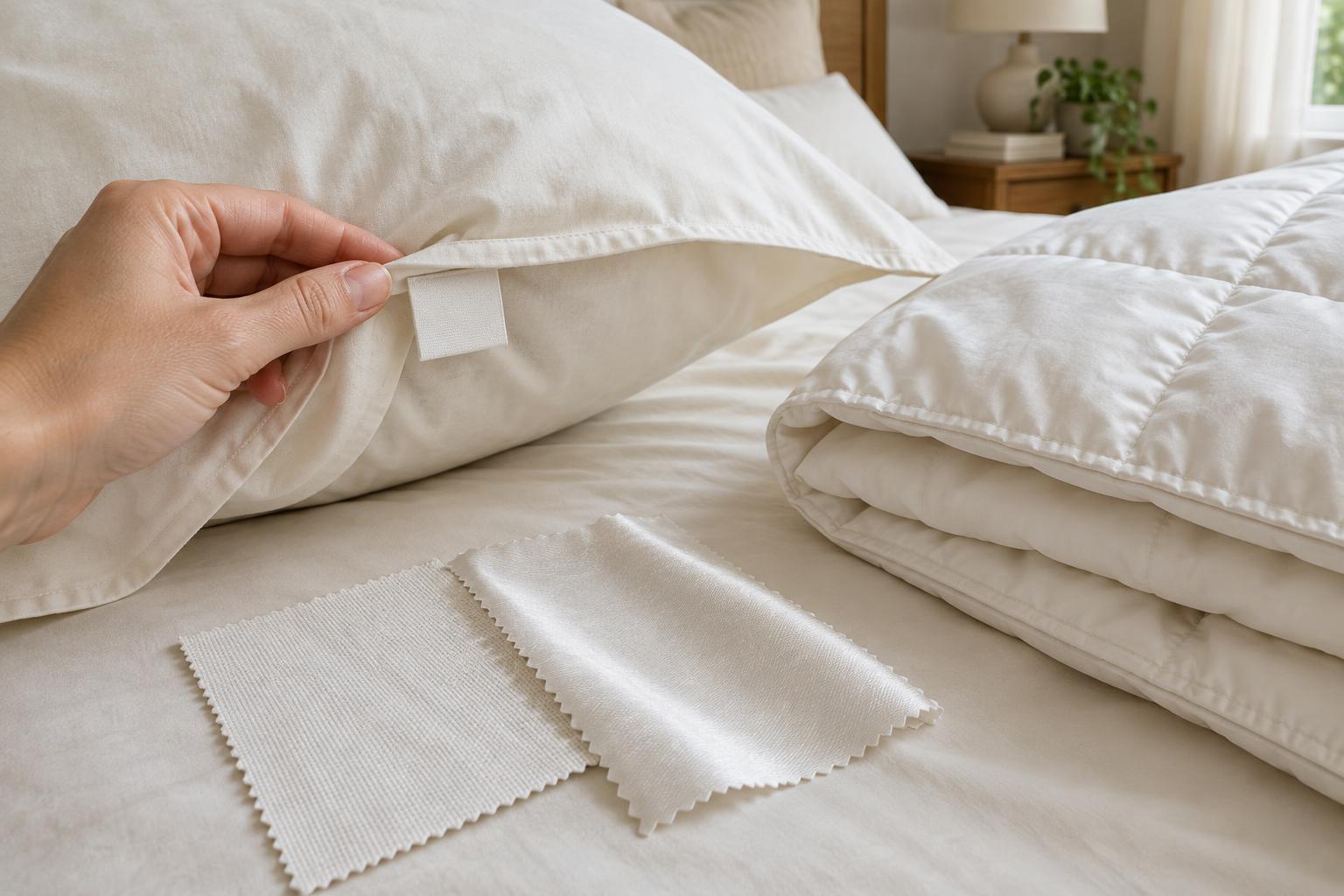
Next, look at the fabric and construction. Cotton and linen can have a different hand and drape from polyester or blends; weave, filling and finishing matter too. A textured coverlet may be appealing if you want visual detail, while a smoother surface may be easier to pair with patterned sheets. Product photographs can suggest a style, but close-ups, material descriptions and measurements are better guides to what you will receive.
Finally, read the care label. Check whether the layer can be machine-washed, whether it fits your washer and dryer, and whether the instructions call for special handling. A bulky bedspread or quilt can be inconvenient even when it is technically washable. If pets use the bed or you expect frequent laundering, ease of care may deserve as much weight as color or pattern.
A simple way to make the choice
Choose a quilt when you want a stitched, layered piece that can function as bedding as well as decoration. Choose a coverlet when you want a lighter-looking finish that is easy to use over or alongside other layers. Choose a bedspread when your main goal is generous coverage and a bed that looks finished from top to near floor level. These are useful starting points, not rigid rules: construction and sizing can overlap.
If you are undecided, picture your normal week rather than an idealized bedroom. How warm do you like to sleep? Will you remove the top layer nightly? How often will you wash it? A well-chosen top layer should suit those habits, cover the bed the way you want and be manageable to care for. The name on the package matters less than whether its dimensions, feel and upkeep work in your room.