Find out how the noise reaches the room
Before buying anything, spend a few minutes listening at different spots in the bedroom. Traffic may be loudest near a window, while voices from a hallway may be clearer beside the door. Noise can also travel through walls, floors and shared building structures. Identifying the most obvious path helps you avoid covering a window when the main problem is a gap beneath the door.
It helps to distinguish blocking sound from softening it. Closing an opening can reduce some sound entering the room. Rugs, curtains and upholstered furniture mainly absorb reflections after sound is already inside, making a space feel less echoey. Both can improve comfort, but a thick rug is unlikely to stop a loud conversation next door. Lower-pitched sounds, such as traffic rumble, are particularly difficult to address with lightweight room furnishings.
Check the door and its gaps
An interior door can let hallway noise through around its edges, even when it is closed. Look for visible light around the frame and check whether the latch pulls the door snugly into place. If the door rattles or does not close fully, adjusting the latch or hinges may be more useful than adding fabric to the room. Adhesive weatherstripping around the frame can help close small gaps, provided it does not prevent the door from latching.
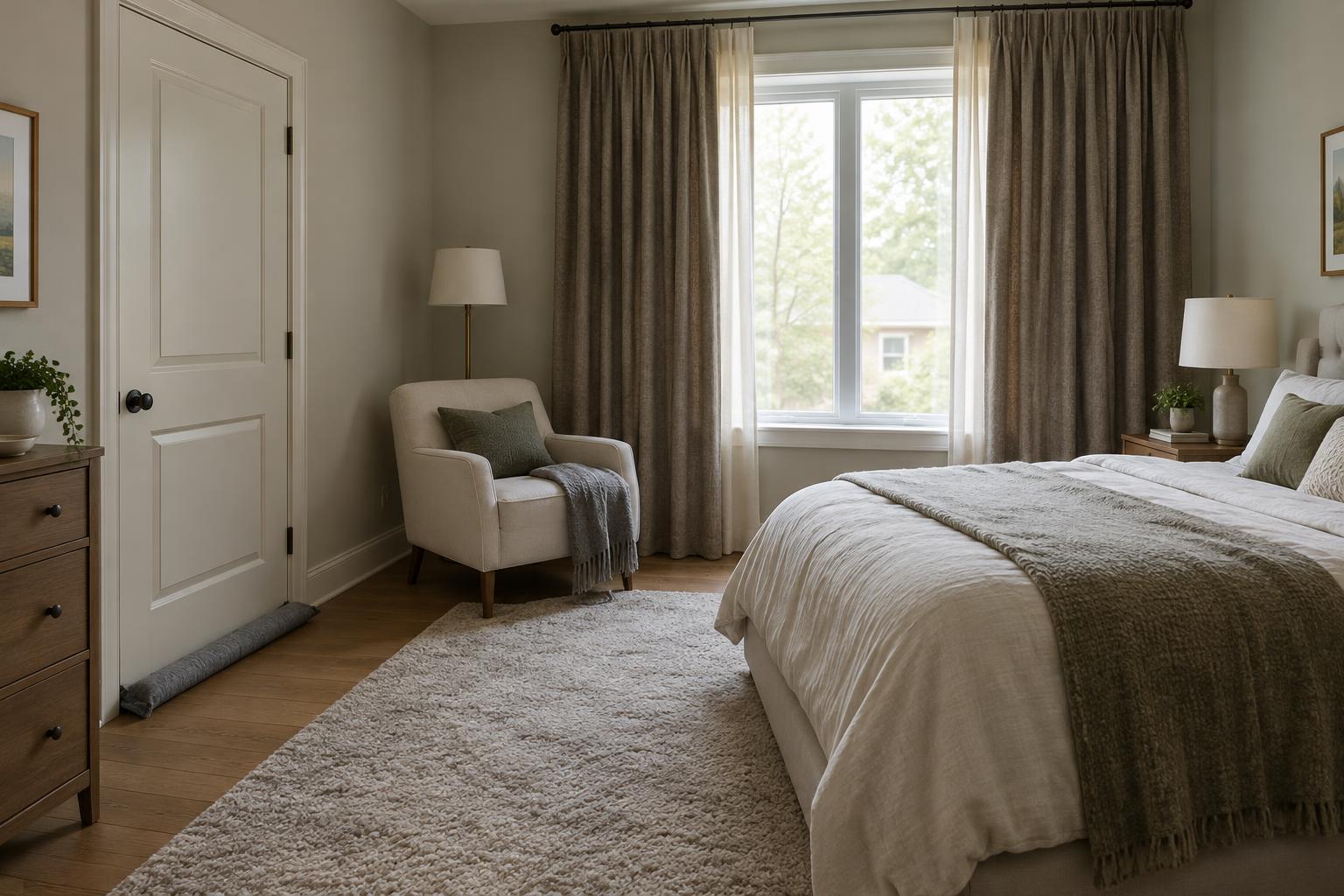
A gap at the bottom of the door is another common path. A fitted door sweep or drop-down seal is a more consistent option than a loose draft stopper, though a draft stopper is easier to remove or test. Measure the clearance before choosing a product so it will not scrape the floor or catch on a rug. Some doors and buildings rely on gaps for airflow; avoid sealing a room so tightly that ventilation is compromised, and do not alter a fire-rated door without checking the applicable requirements.
Replacing a lightweight hollow-core door with a heavier solid-core model may help where door noise is a persistent problem, but it is a larger project. The frame, seals and installation still matter: sound can pass through remaining gaps. If you rent, start with removable measures and check which changes your agreement permits.
Improve the window before covering it
Windows are often the first place to investigate when outdoor noise is the concern. Make sure each window closes and locks as intended, then inspect the seals for worn, loose or missing sections. A window that does not shut properly may need adjustment or repair. Closing that gap may also make the room more comfortable without changing how it looks.
Heavy, closely fitted curtains can make a bedroom feel calmer by reducing some reflections and light, but they should not be treated as a substitute for a well-sealed window. For the most coverage, choose panels that extend beyond the sides of the frame and hang close to the wall, while keeping them clear of heaters and other hazards. An additional window insert or a window replacement may be worth considering for substantial outdoor noise, but suitability depends on the existing window, ventilation needs, cost and any building rules. Compare those factors before committing to a permanent change.
Use soft furnishings for a less echoey room
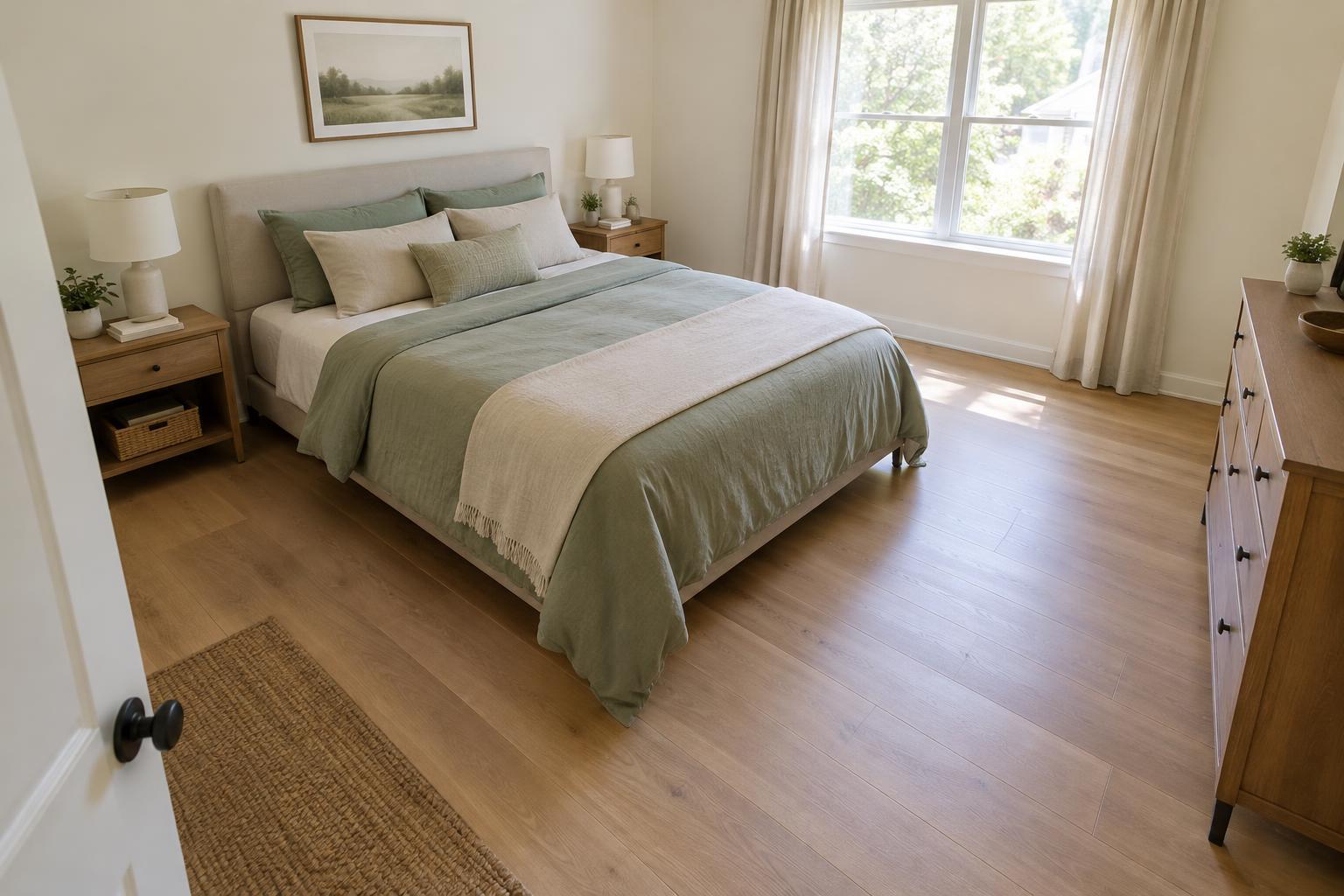
Bedrooms with hard floors, bare walls and little furniture can reflect sound around the room. A rug with a suitable pad can reduce footsteps and soften reflections, particularly on a hard floor. Curtains, a fabric headboard and upholstered furniture can also help a sparsely furnished room feel less lively. You do not need to add everything at once; try one change, then listen for the difference in the sounds that bother you.
Placement matters more than simply buying the thickest material available. A rug beside the bed can quiet footfalls where you walk most. Curtains are most useful when they cover the window fully. A bookcase or wardrobe against an otherwise bare wall may change how sound reflects in the room, but it should not be expected to soundproof a shared wall. Keep furnishings easy enough to clean, especially if they collect dust or block access to a window.
Make changes in a sensible order
Start with simple checks: close windows firmly, fix obvious rattles and identify gaps at the door. Next, try reversible options such as a draft stopper, suitable weatherstripping, curtains or a rug. If the problem remains, consider whether a more involved door or window improvement addresses the noise source you identified. This order lets you learn what helps before spending money on a major change.
A quieter room does not have to be silent to feel more comfortable. Focus on the sounds that interrupt the activities you use the bedroom for, and judge each change against that goal. If noise still seems to come through a shared structure rather than an opening, doors and soft furnishings may offer only limited improvement.