Flipping and rotating do different jobs
Flipping turns a mattress over so its former underside becomes the sleeping surface. Rotating keeps the same side facing up but moves the head end to the foot end. Both actions change where regular pressure falls, but only flipping changes which surface supports you. That distinction matters because many mattresses are built with a designated top and bottom.
A one-sided mattress may have softer comfort layers above firmer support layers. Turn it over, and you may end up sleeping on the base fabric or a firm layer that was never intended to be on top. A two-sided mattress has sleeping surfaces on both faces and may be suitable for flipping. Neither design is inherently better for every household; the useful question is how your particular mattress was made.
How to tell whether your mattress is flippable
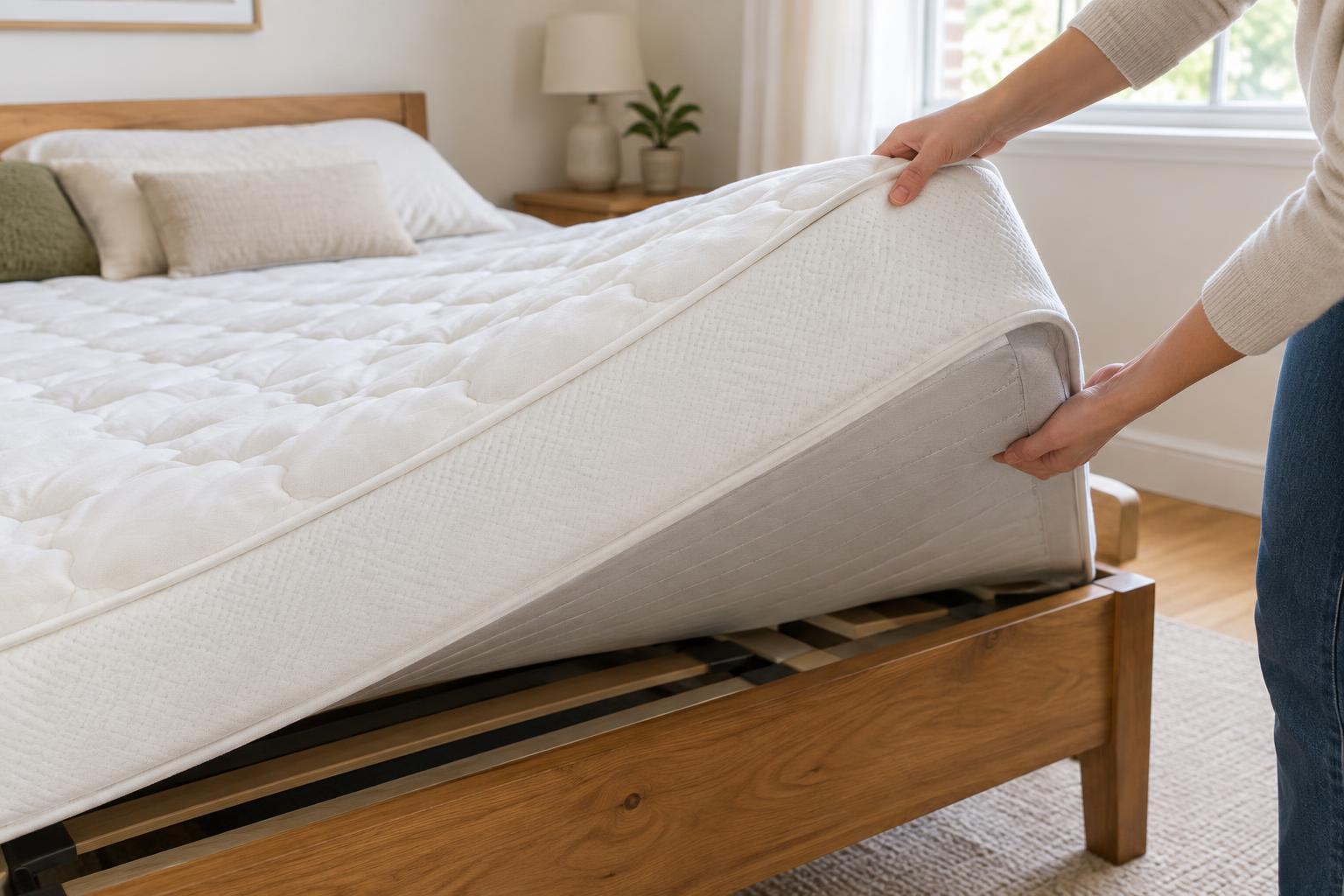
Start with the care label, product paperwork or manufacturer’s instructions for your exact model. Look for terms such as “two-sided,” “double-sided” or “flippable,” along with any directions about turning. Do not assume a mattress is flippable because its underside is covered in fabric. A finished-looking bottom can still be a non-sleep surface.
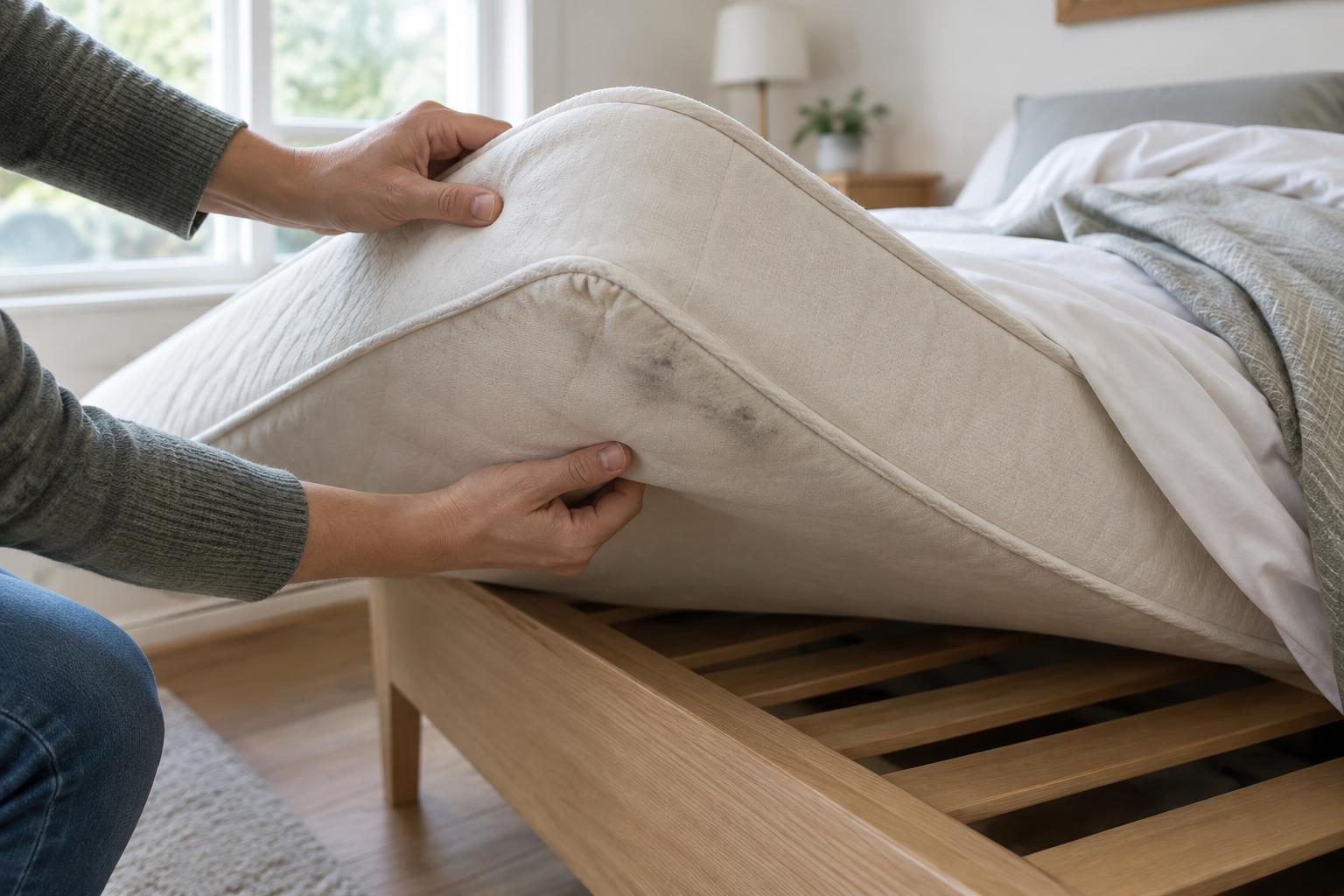
If the instructions are missing, inspect the mattress before moving it. Are both faces similarly quilted or padded, or is one face noticeably plainer? Does the model have a pillow top, a visibly layered foam edge, or a marked top side? These clues can help, but they are not proof: some flippable designs deliberately give each side a different feel. When the construction remains unclear, check the model information with the seller or manufacturer rather than guessing.
What common constructions usually mean for care
Many foam, latex and hybrid mattresses are assembled in layers intended to work in one direction. Their comfort materials sit above a firmer core, so they are commonly rotated, not flipped. Mattresses with a pillow top on only one face are also generally one-sided. An innerspring mattress, however, is not automatically flippable: it depends on whether it has usable comfort layers on both sides of the spring unit.
Some mattresses are specifically designed with two usable faces, including models that offer a different feel on each side. Follow their instructions for which face to use and how to turn them. A zoned mattress may also have a specified head and foot orientation, so even rotation deserves a quick check. Construction-specific guidance is more reliable than a blanket rule for all mattresses of the same material.
If flipping is allowed, plan the move
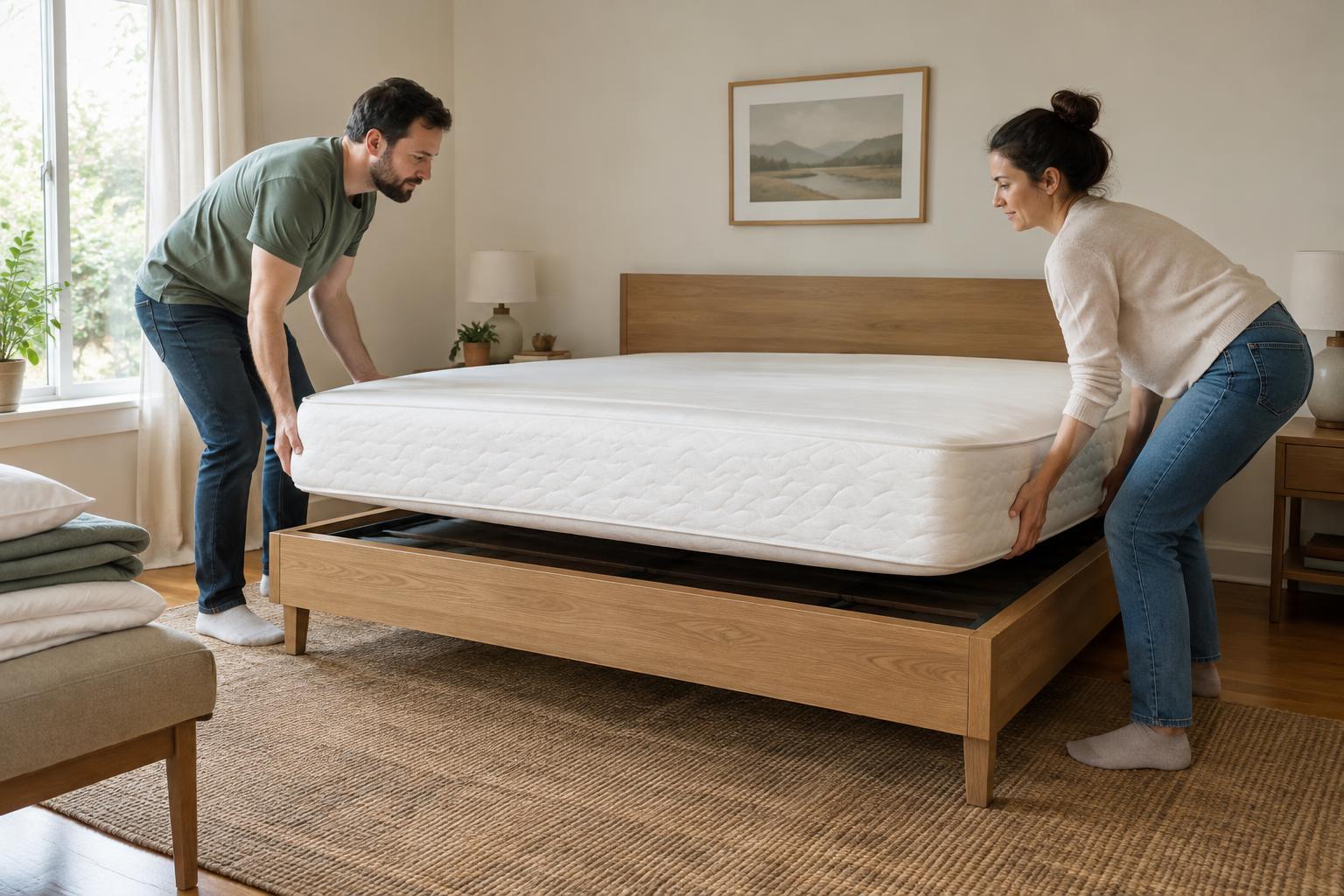
Remove the bedding and clear space around the bed. Check that the mattress can pass nearby furniture and that there is room to set it down without dragging it against sharp edges. Mattresses can be heavy and awkward, especially larger sizes. Ask another person to help if you cannot control the move comfortably, and use sewn-in handles only as the manufacturer directs; some are meant for positioning rather than bearing the mattress’s full weight.
For a two-sided mattress, follow its care directions on whether and how often to flip or rotate. You can note the last turn on your calendar rather than relying on memory. Avoid sharply bending or folding the mattress unless its instructions permit it, and keep it supported throughout the move. If it has different feels on each side, make sure the face you want is on top before replacing the bedding.
When turning is not enough
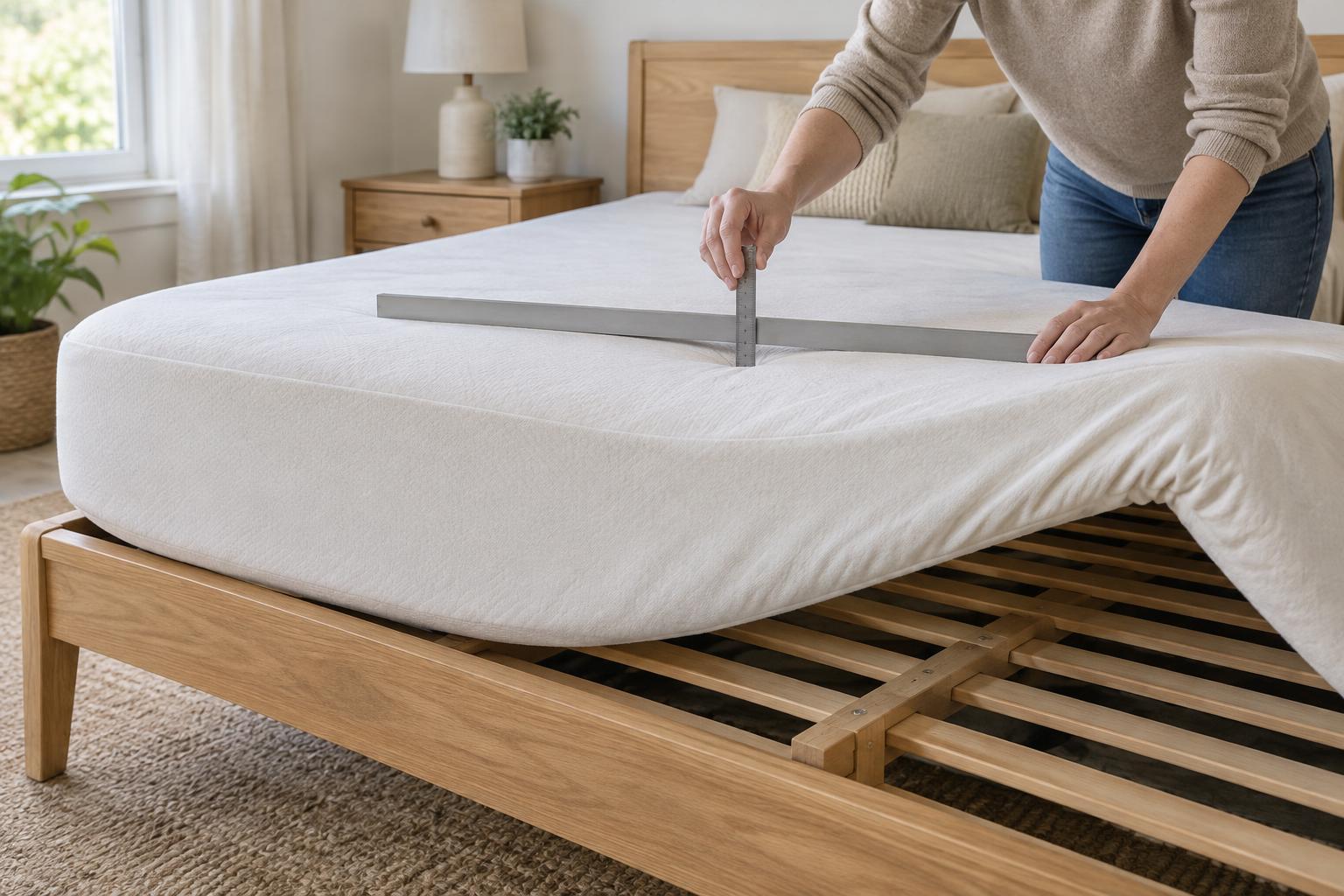
Rotating or flipping may help distribute ordinary wear, but it cannot restore worn-out materials or fix a support problem. If a mattress feels uneven, check that its foundation or bed frame meets the manufacturer’s requirements and that all slats or supports are in place. A mattress protector and regular cleaning according to the care label can help manage spills and surface buildup, whether the mattress is one-sided or two-sided.
If you see a persistent dip, damaged stitching or another concern, record what you observe and consult the care and warranty information before attempting a repair. The simplest rule for routine upkeep is to confirm the construction first: flip only a mattress made for two-sided use, rotate when its instructions allow, and do not force a turn that the design does not support.