What a mattress warranty is for
A mattress warranty is the maker’s written promise to address certain problems with the product under stated conditions. It usually focuses on defects in materials or workmanship, rather than how comfortable the mattress feels. The warranty document—not a headline promising a certain number of years—sets out what is covered, how long coverage lasts, and what remedy the company may offer.
Possible covered issues include a manufacturing fault in the cover or stitching, a broken component in an innerspring mattress, or a permanent indentation that meets the warranty’s stated measurement threshold. These are examples, not guarantees: brands define defects differently. Some warranties provide full coverage for an initial period and reduced or prorated coverage later. Under prorated terms, the owner may have to pay a share of the replacement cost.
Common exclusions and limits
Comfort changes are among the most important exclusions to understand. Foam can soften with use, and your preferences may change, without the mattress meeting a warranty definition of defective. Likewise, a visible impression may not qualify if it is shallower than the specified threshold. Check how the brand says an indentation must be measured; an impression while someone is lying on the bed may be treated differently from one measured on an unloaded mattress.
Warranties also commonly exclude damage from spills, stains, burns, cuts, pests, or improper handling. Stains can complicate a claim even when the reported defect seems unrelated, so read the condition requirements before buying. Normal wear, changes in appearance, and damage caused by use outside the stated guidelines may also fall outside coverage. A mattress warranty generally does not cover pillows, sheets, or the bed frame unless the written terms expressly say otherwise.
Why the base and care instructions matter
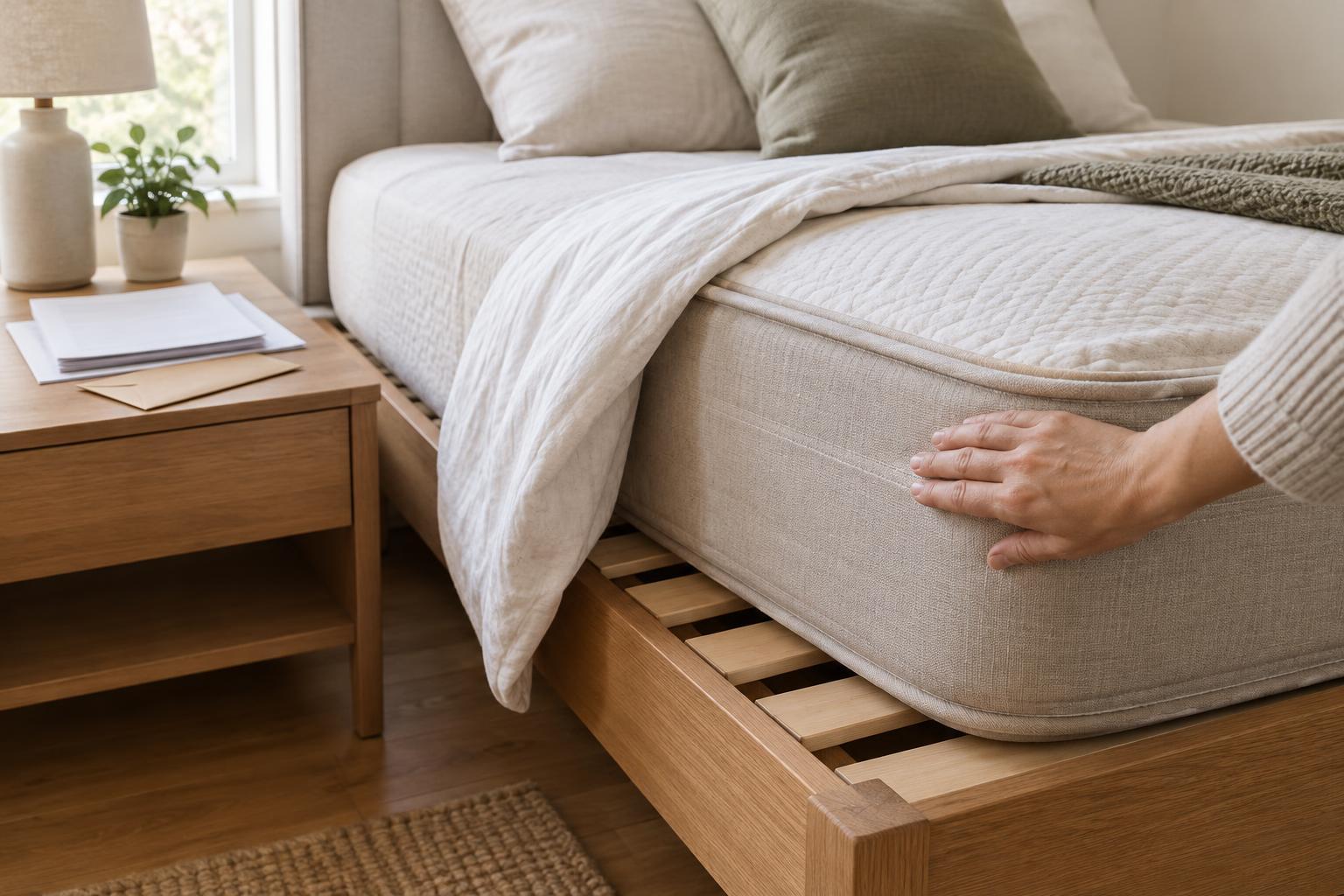
A mattress needs the support its maker specifies. Depending on the model, the warranty may require a particular type of foundation, closely spaced slats, a center support for larger sizes, or another suitable base. An unsupported or uneven foundation can let a mattress bend in ways it was not designed to, and it may affect warranty eligibility. Do not assume an old box spring or a visually similar frame meets the new mattress’s requirements; compare the written specifications.
Care requirements vary, too. Some mattresses should be rotated periodically, while others have a designated top and should not be flipped. The care guide may also explain how to move the mattress, whether certain cleaning methods are allowed, and which accessories are compatible. Following those directions cannot prevent every defect, but it helps avoid damage and makes it easier to show that the mattress was used as intended.
What to keep and how to start a claim
Save the purchase receipt, order confirmation, warranty terms, and any required mattress labels. A warranty may apply only to the original purchaser or to purchases through specified sellers. If you move, keeping a digital copy of these records can be simpler than trying to reconstruct the purchase years later. Photograph the mattress and its foundation when you set them up, especially if the warranty specifies a support arrangement.
If a problem develops, read the claim procedure before moving or discarding anything. The company may ask for proof of purchase, photos, a description of the issue, measurements, and an image of the support base. Ask which costs you would be responsible for, such as shipping, inspection, or removal, before agreeing to the process. Keep copies of what you submit and the responses you receive. The company’s stated remedy may be repair, replacement, credit, or another option rather than a refund.
How to compare warranties before buying
Start with the definitions, not just the length. Two warranties with the same advertised duration can differ substantially in their indentation thresholds, coverage periods, proration schedules, owner responsibilities, and claim costs. Look for clear answers to practical questions: What counts as a defect? What foundation is required? Are stains disqualifying? Who pays to send a mattress back, if shipping is needed? Does replacement start a new warranty or continue the original one?
Finally, keep the warranty separate from the trial or return policy. A trial lets an eligible buyer decide whether a mattress suits them within a limited period; a warranty addresses specified defects under its own rules. Reading both policies before purchase gives you a more useful picture of your options than either headline alone.