Start by removing bedding and containing the spill
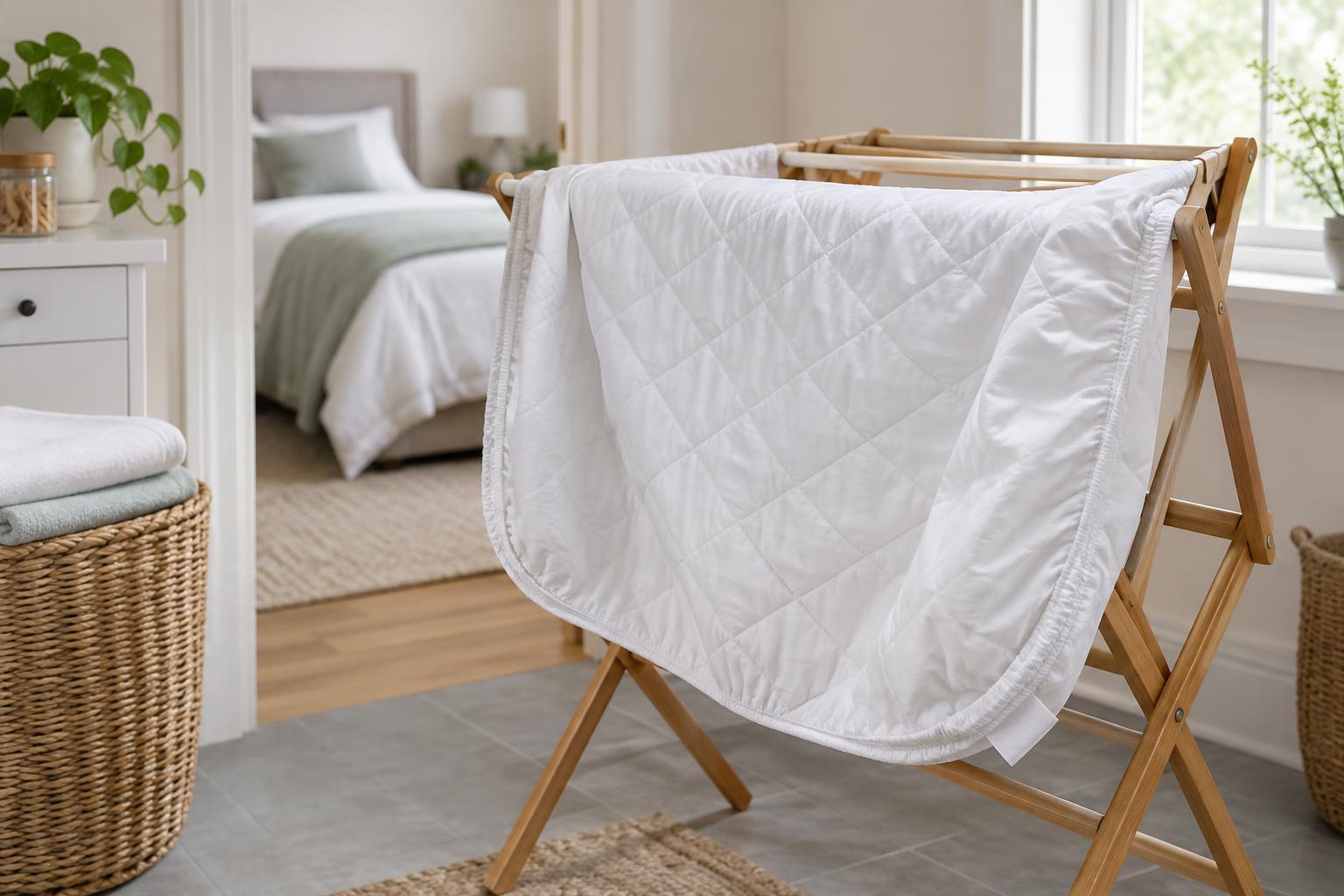
Take off the sheets, mattress protector and any removable bedding right away. Check their care labels before washing them. If the mattress has powered features, disconnect it from electricity before working near the spill. Move pillows and other items out of the way so you can see how far the liquid has traveled.
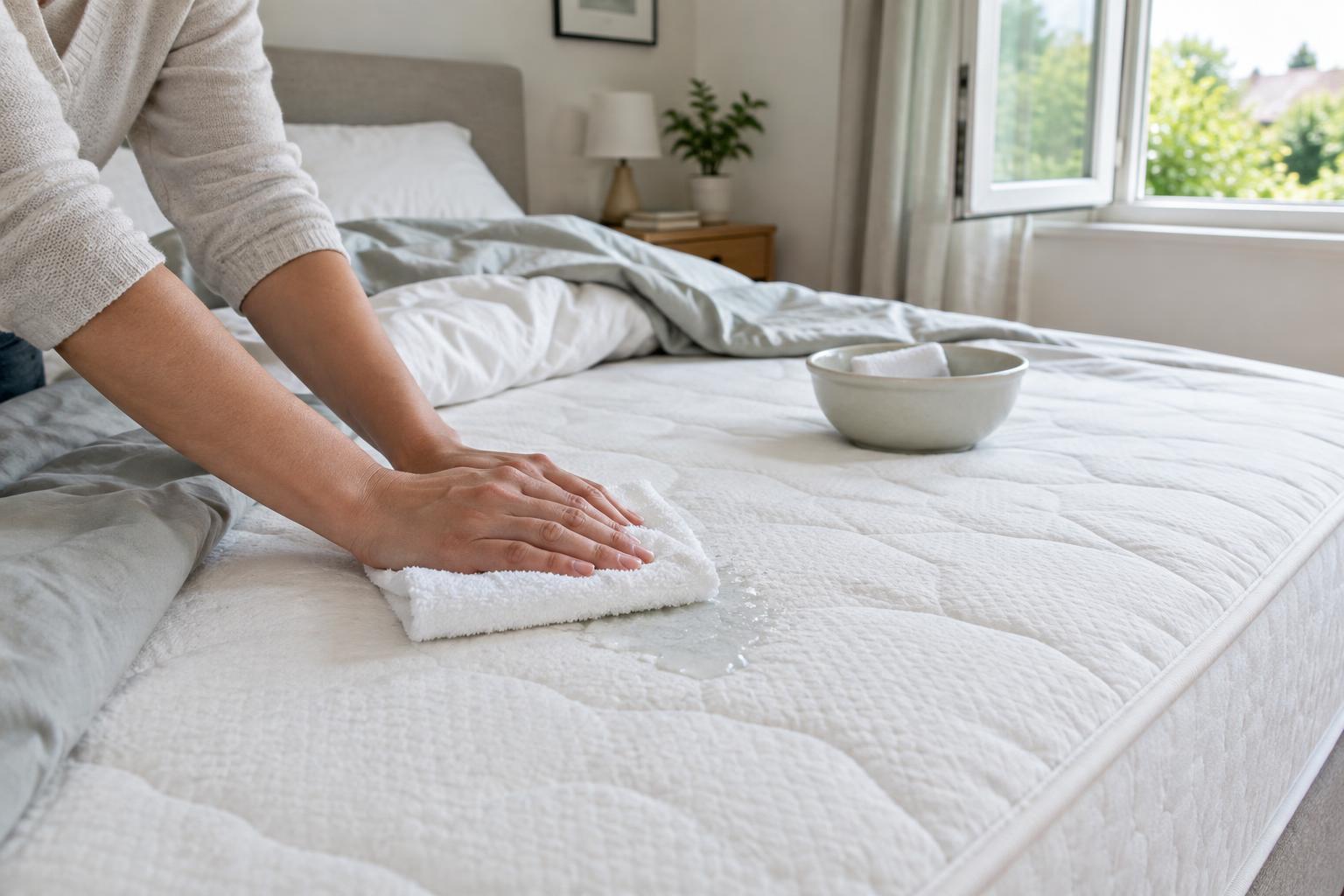
Press a clean, absorbent towel onto the wet area and lift it away. Repeat with dry sections of the towel until it stops picking up much moisture. Blot from the outside edge toward the center to limit spreading. Avoid rubbing or pushing hard enough to drive liquid deeper into the mattress. A fresh spill is often easier to manage than one left under damp bedding, so make blotting the first priority.
Clean only as much as the spill requires
Check the mattress care instructions before applying a product. For a small water spill, blotting and drying may be all that is needed. For a drink or another spill that leaves residue, apply a small amount of suitable cleaner to a cloth rather than pouring it onto the mattress. Test it first on an inconspicuous area if the care instructions allow. Dab the affected fabric gently, then use a separate, barely damp cloth to lift away cleaner residue.
Different spills may call for different cleaning products, but more liquid is rarely the answer. If you use an enzyme cleaner for an organic spill, follow its label and the mattress maker’s instructions, including any limits on use or rinsing. Do not mix cleaning chemicals. Strong products can discolor fabric or damage materials, and a large wet area is difficult to dry inside a mattress.
A stain that remains after careful cleaning does not necessarily mean the area is still wet. Likewise, a clean-looking surface does not prove the layers below it are dry. Keep stain removal and moisture removal as separate goals, with thorough drying taking priority before the mattress goes back into use.
Give moisture a way out
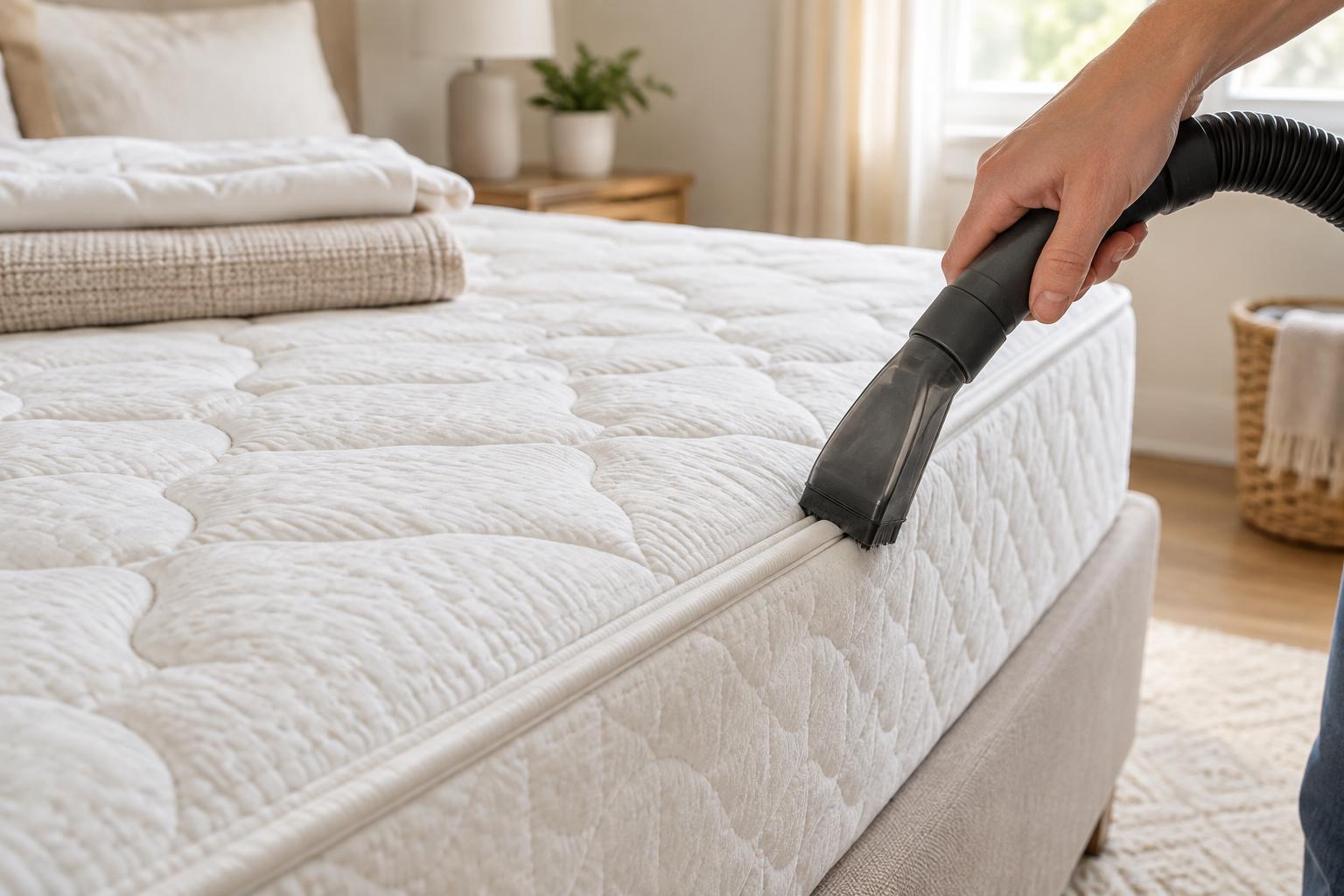
Leave the mattress uncovered and increase air circulation around it. Open a window if conditions are suitable, or direct a fan across the damp area. A dehumidifier may help when the room feels humid. If you can move the mattress safely, positioning it so air reaches more than one side may speed drying. Protect it from dirt while it is off the bed, and avoid bending it in a way its construction does not allow.
Skip high heat unless the manufacturer specifically permits it. Heat can affect some foams, adhesives, covers and finishes, while drying the surface faster than the interior may give a misleading impression. Do not replace sheets, a protector or a topper while the mattress feels damp; those layers restrict airflow. Drying time varies with the spill size, room conditions and mattress construction, so use the condition of the mattress rather than a fixed timetable to decide when it is ready.
Check for moisture below the surface
After the surface seems dry, press a clean, dry towel firmly against the area and check for dampness. Feel around the spill’s edges, inspect accessible sides and check the underside if liquid might have passed through. A spill that reached deep foam or several internal layers can be harder to dry than one confined to the cover. Do not remove a mattress cover simply to inspect inside unless its instructions say removal is safe; some covers are not intended to be taken off.
If dampness persists, continue ventilating the mattress and reassess it before making the bed. A musty smell or visible mold is a reason to stop treating the problem as a simple surface stain. If a large spill soaked deeply into the mattress and you cannot get it thoroughly dry, contact the manufacturer for care guidance or consider whether the mattress needs replacing. Concealing persistent moisture beneath bedding is not a reliable fix.
Make the next spill easier to handle
Once the mattress is fully dry, put clean bedding back on. A washable, liquid-resistant mattress protector can provide a useful barrier for future accidents; choose one that fits securely and follow its laundering instructions. Keep spare towels nearby if spills are likely in the household, and address small wet spots promptly rather than waiting until the next bedding change.
For this spill, the simplest sequence is also the most useful: remove wet bedding, blot without spreading the liquid, clean lightly if residue requires it, and leave the mattress exposed to moving air. Take one last look and feel before covering it. Protecting a mattress after a spill depends less on aggressive scrubbing than on getting moisture out and allowing enough time for the whole affected area to dry.